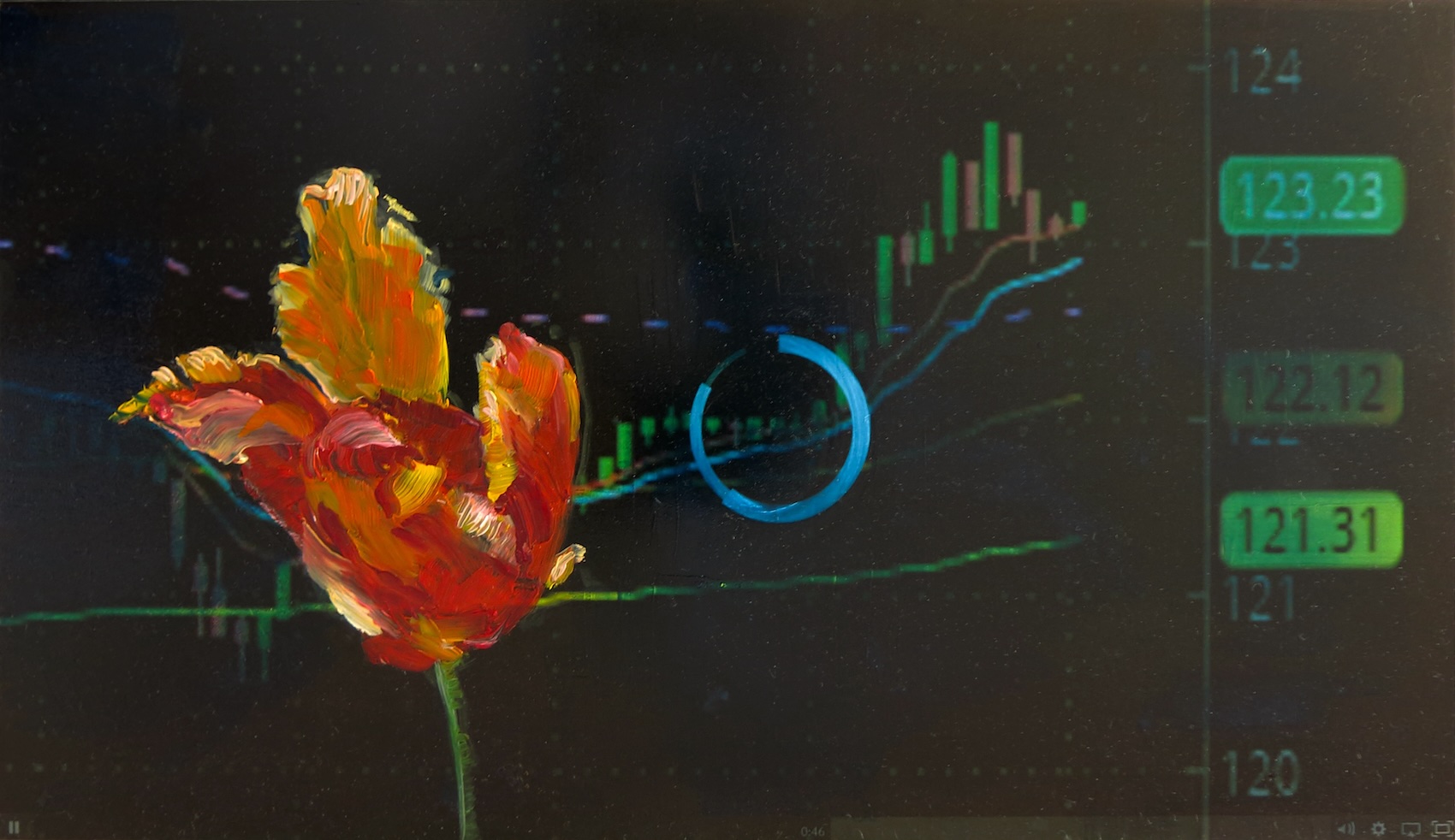
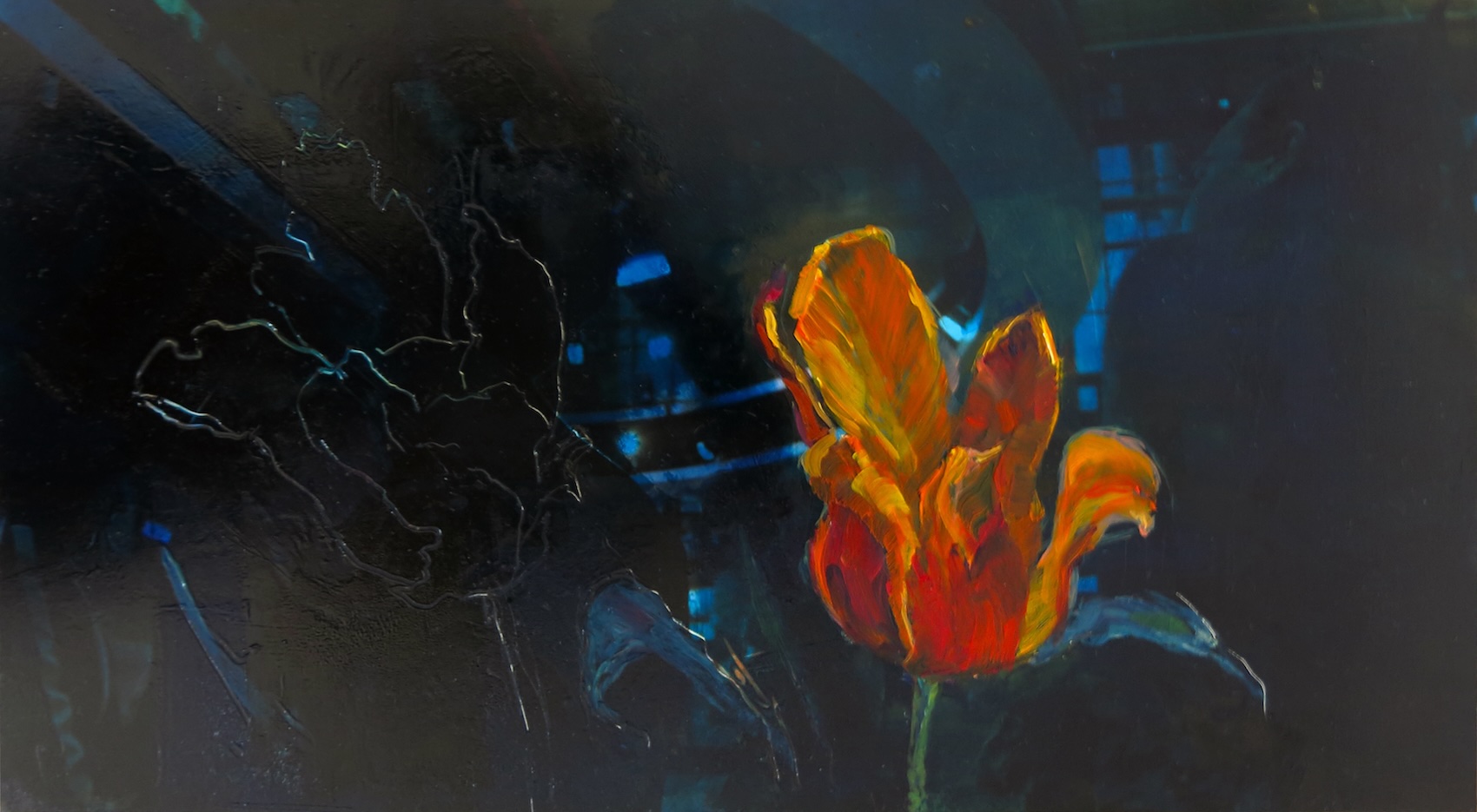
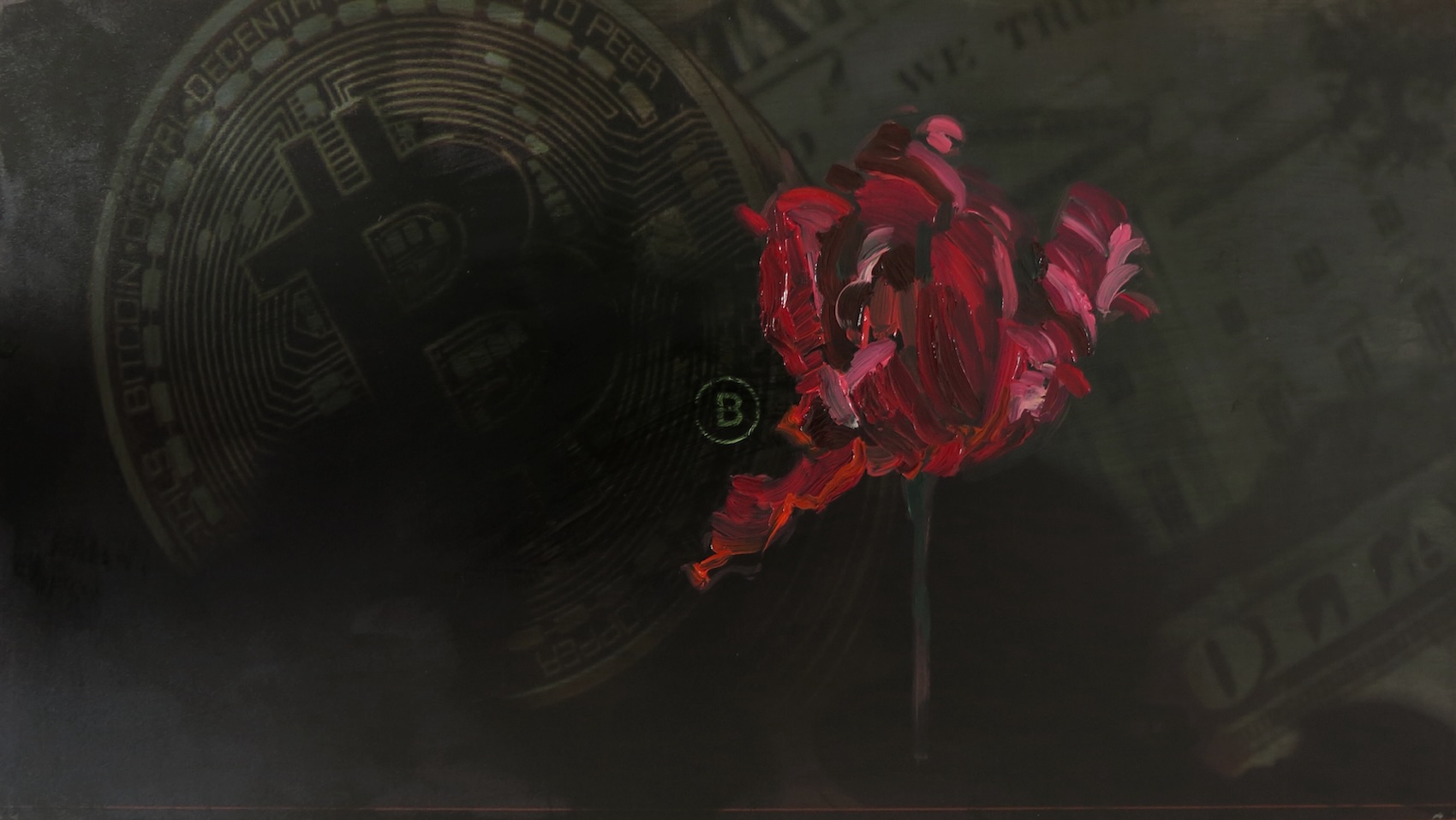
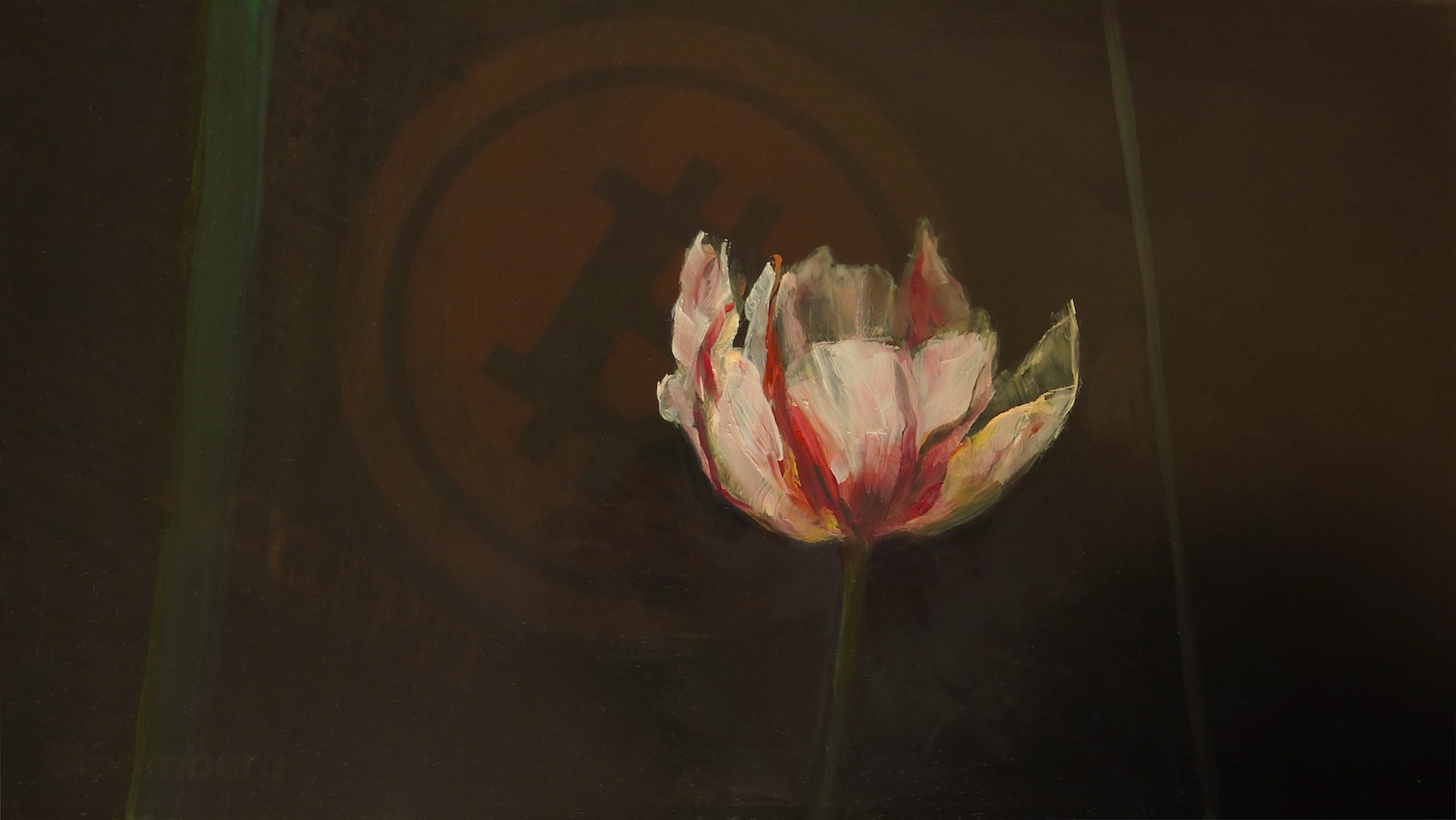
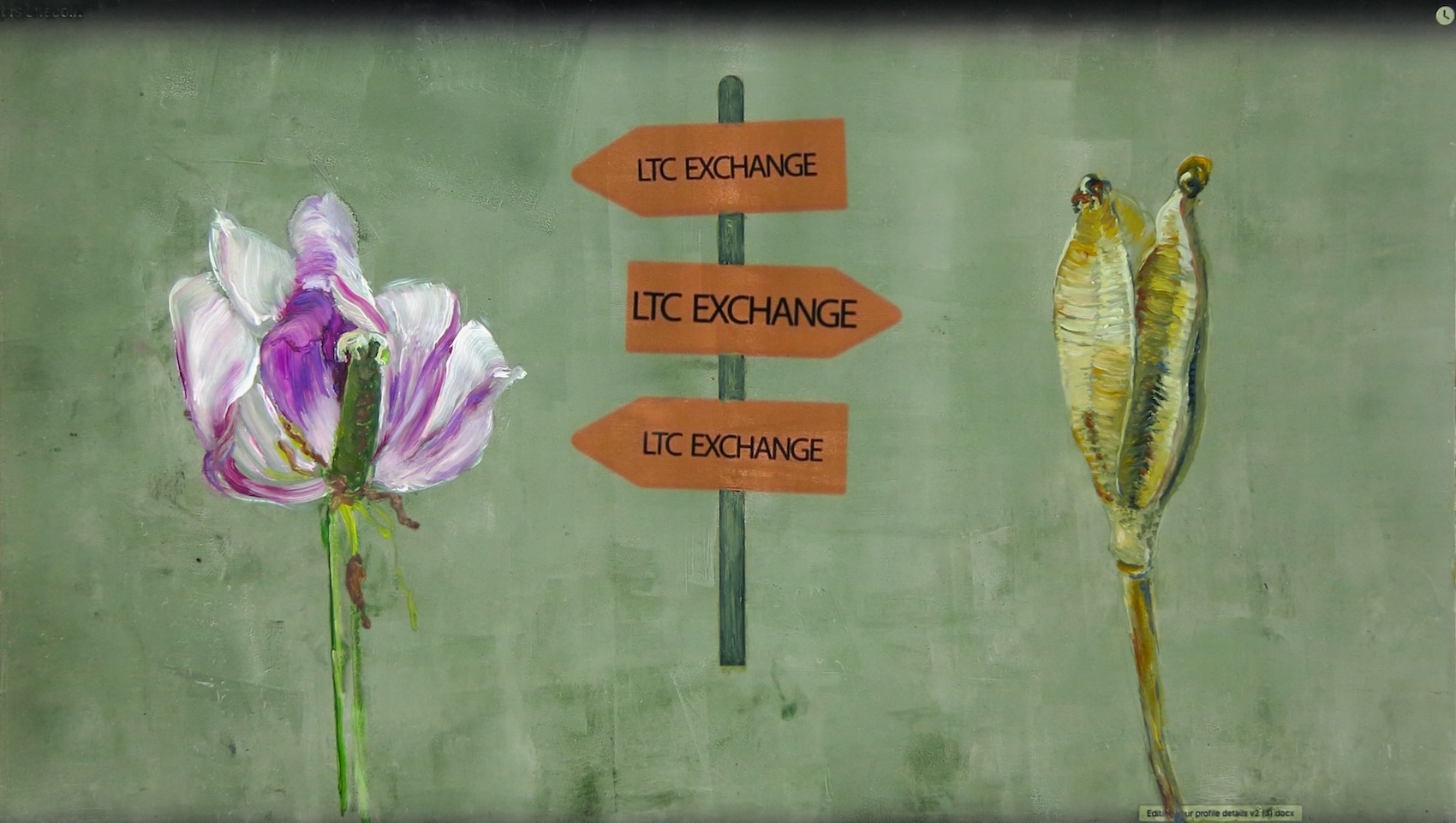
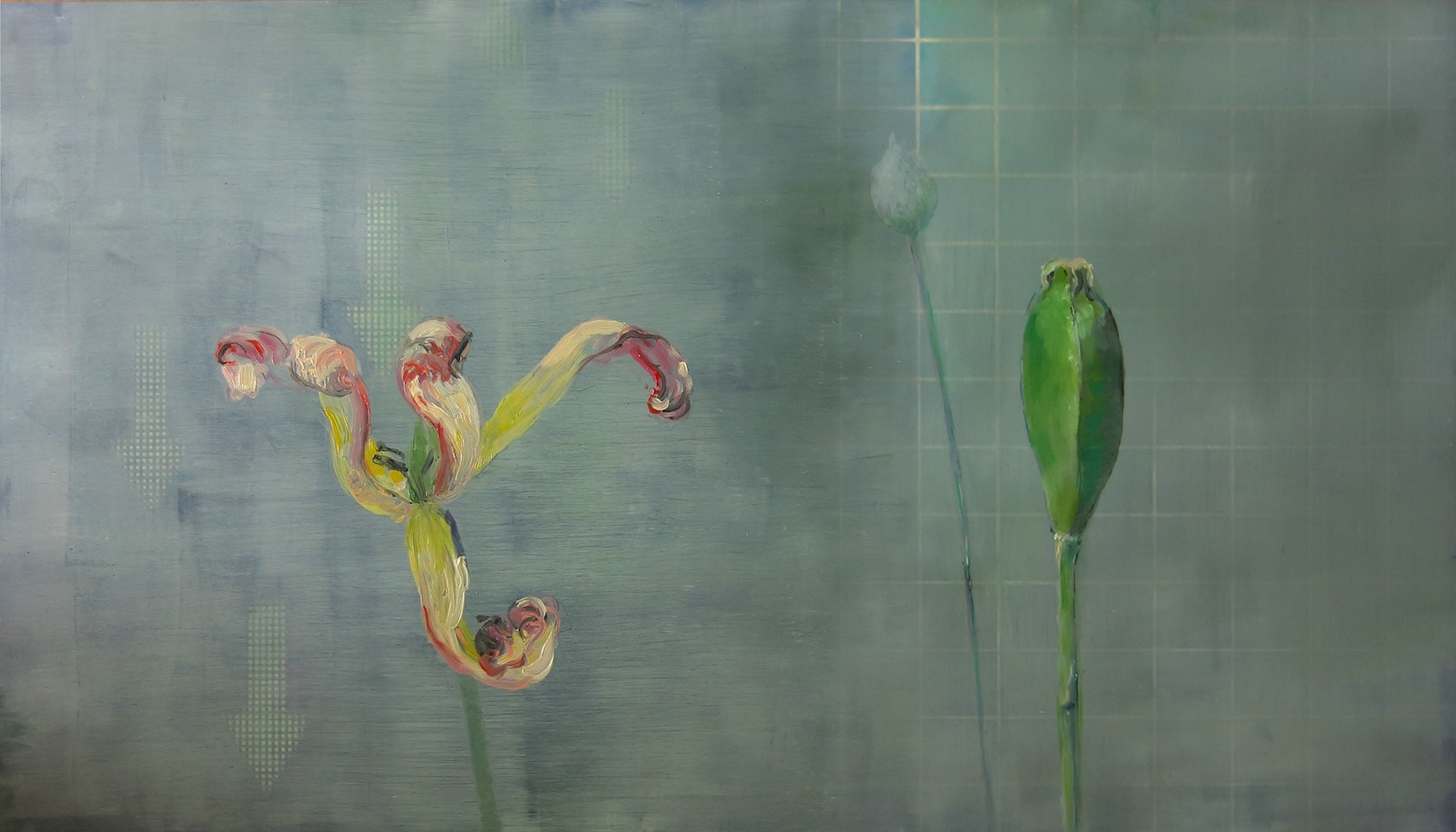
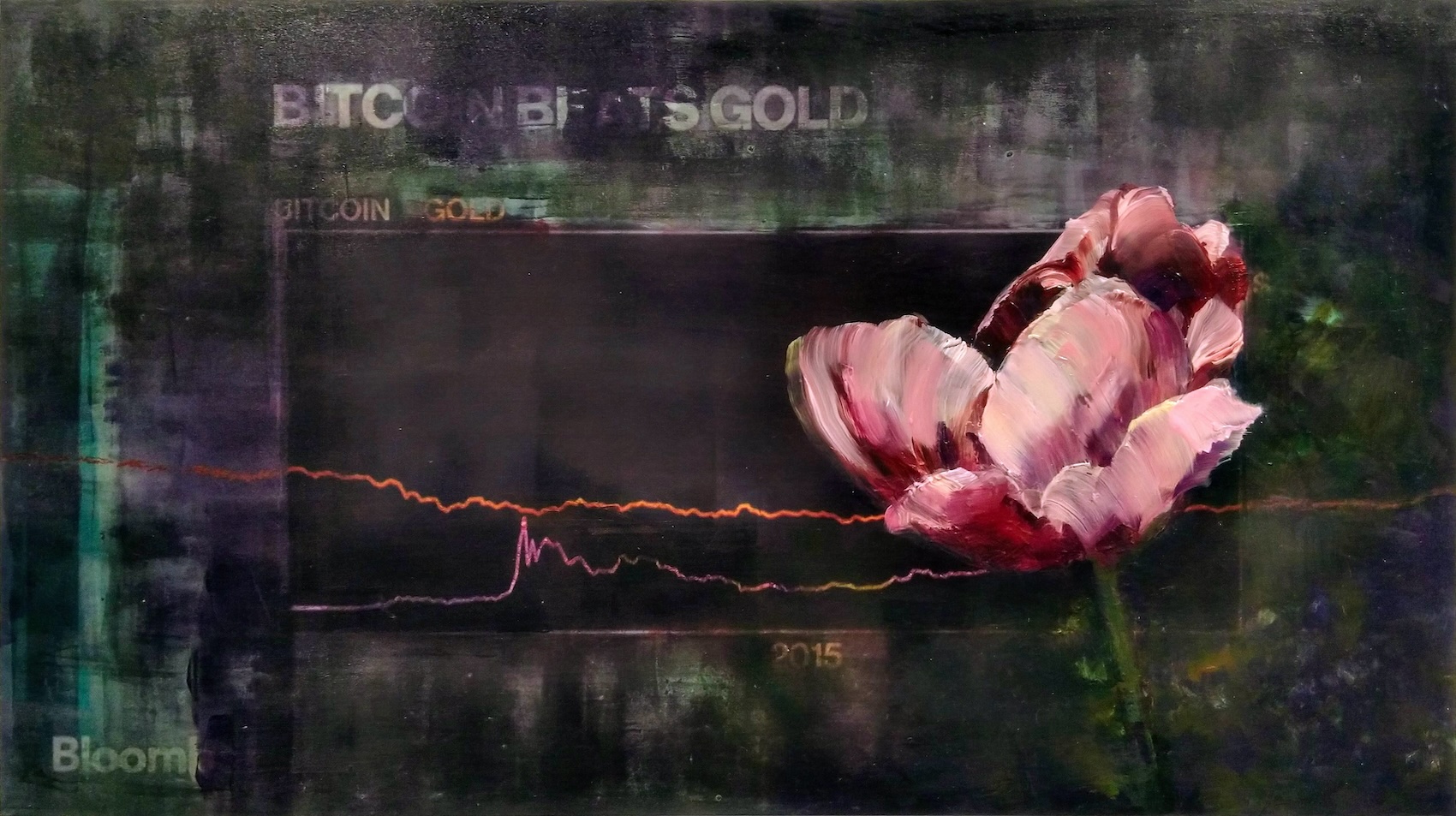
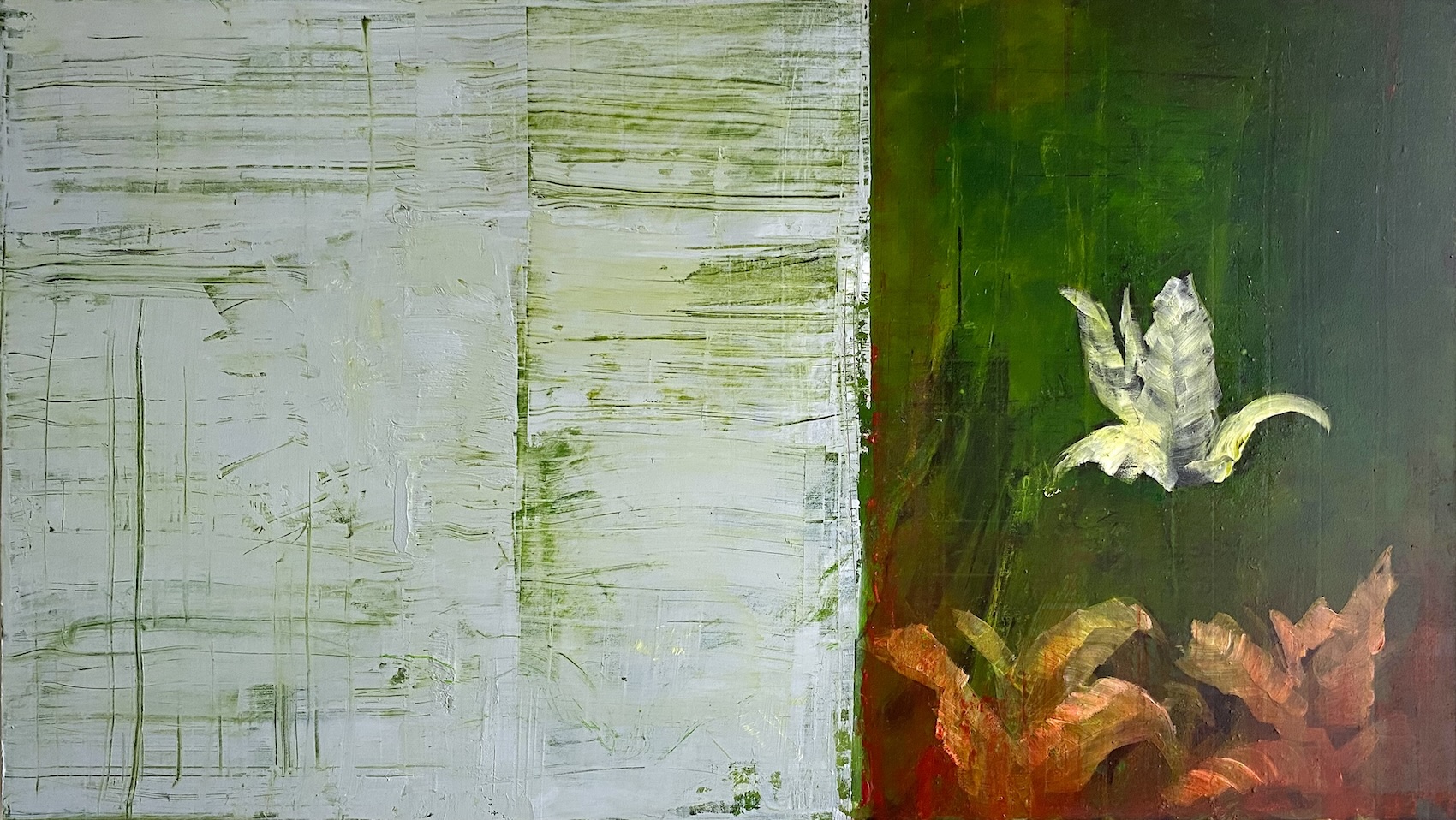
‘Transactions’ is a series of paintings that link seventeenth century tulip mania in Holland, with contemporary financial investments, such as the stock market and crypto currencies. Human nature has both a desire to create and exploit. All transactions are acts of hope where often the purchaser wishes to benefit from future accruals of money. Paintings in their own right can also frequently be considered as investment commodities, where collectors speculate on their value increasing for future transactions.
Tulips became widely distributed throughout Europe from their discovery in Asia during the twelfth century. Carolus Clusius, a French horticulturist who set up a botanic garden at Leiden University in 1593, introduced them to the Netherlands. The striped tulip became very fashionable. The stripe unbeknown at the time was caused by a virus and was not genetic which meant the pattern was rare and could not be bred and repeated with any certainty. This desirable colouration caused people to buy bulbs in the hope they would provide similar flowers in the Spring. Bulbs changed hands many times and this speculative market gave the name of ‘futures’, a term which is currently used in contemporary stock market trading.
Transaction no. 1, 2018, oil on metal panel, 22 x 40cm
Transaction no. 2, 2018, oil on metal panel, 22 x 40cm
Transaction no. 3, 2018, oil on metal panel, 22 x 40cm
Transaction no. 4, 2018, oil on metal panel, 22 x 40cm
Transaction no. 5, 2018, oil on metal panel, 22 x 40cm
Transaction no. 6, 2018, oil on metal panel, 22 x 40cm
Transaction no. 8, 2018, oil on metal panel, 22 x 40cm
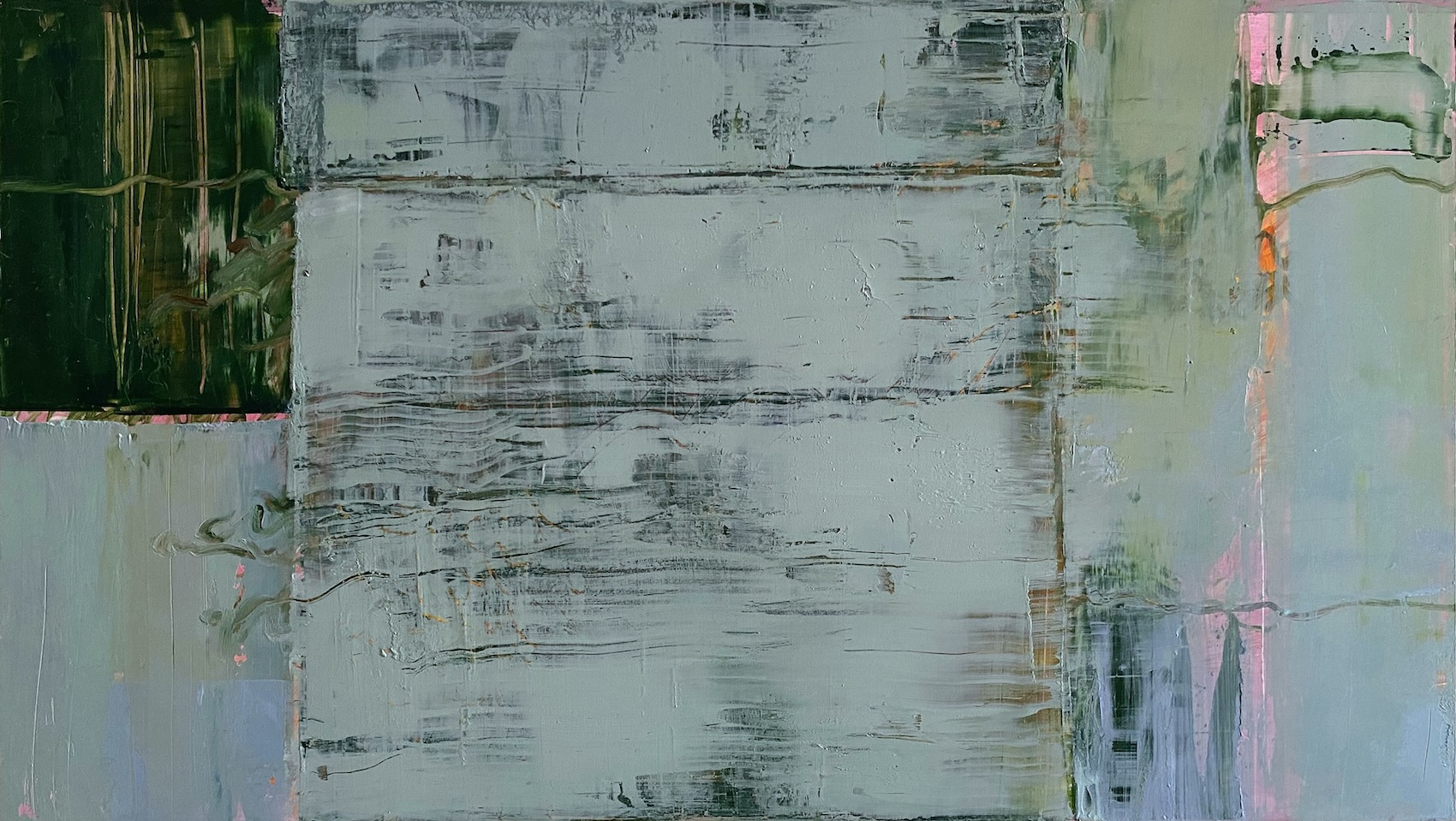
Obscure Transactions diptych (left panel) 2018, oil on metal panel, 22 x 40cm
Obscure Transactions diptych (right panel), 2018, oil on metal panel, 22 x 40cm
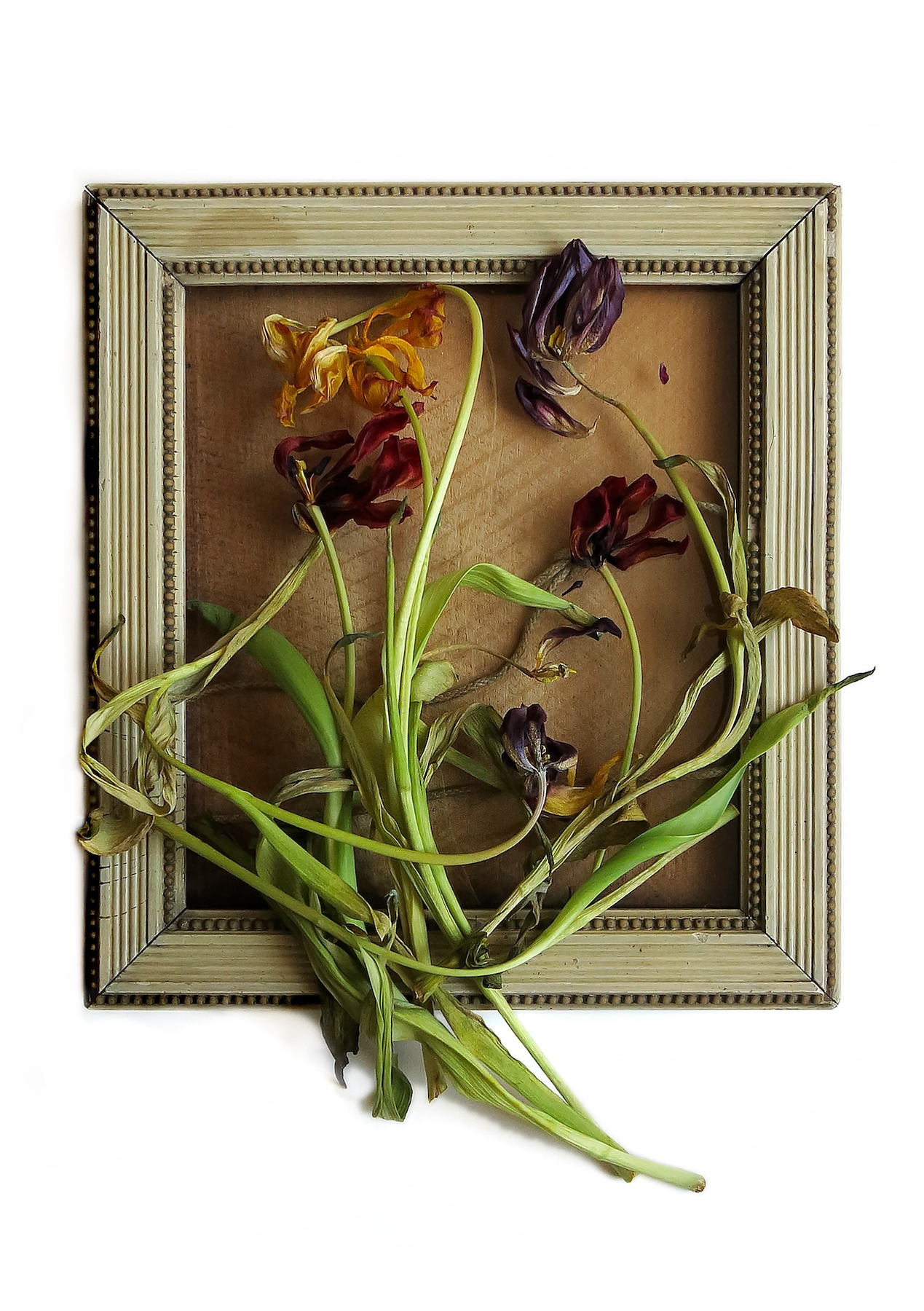
‘Nature morte’ – Tulip
The French translation of the painting genre‘Still life’ is dead nature – ‘Nature morte’. The tulips have been photographed and captured at their point of death – a reminder of the fleeting nature of life. This image has been prompted by Dutch 17th century still-life painting, which was often painted on wooden panels. At the time, the Tulip was a prized flower in Holland, and bulbs often costed more than the paintings.
Nature Morte no.1, 2019, photograph, 45 x 40cm (giclée print edition of 10 – custom sizing)
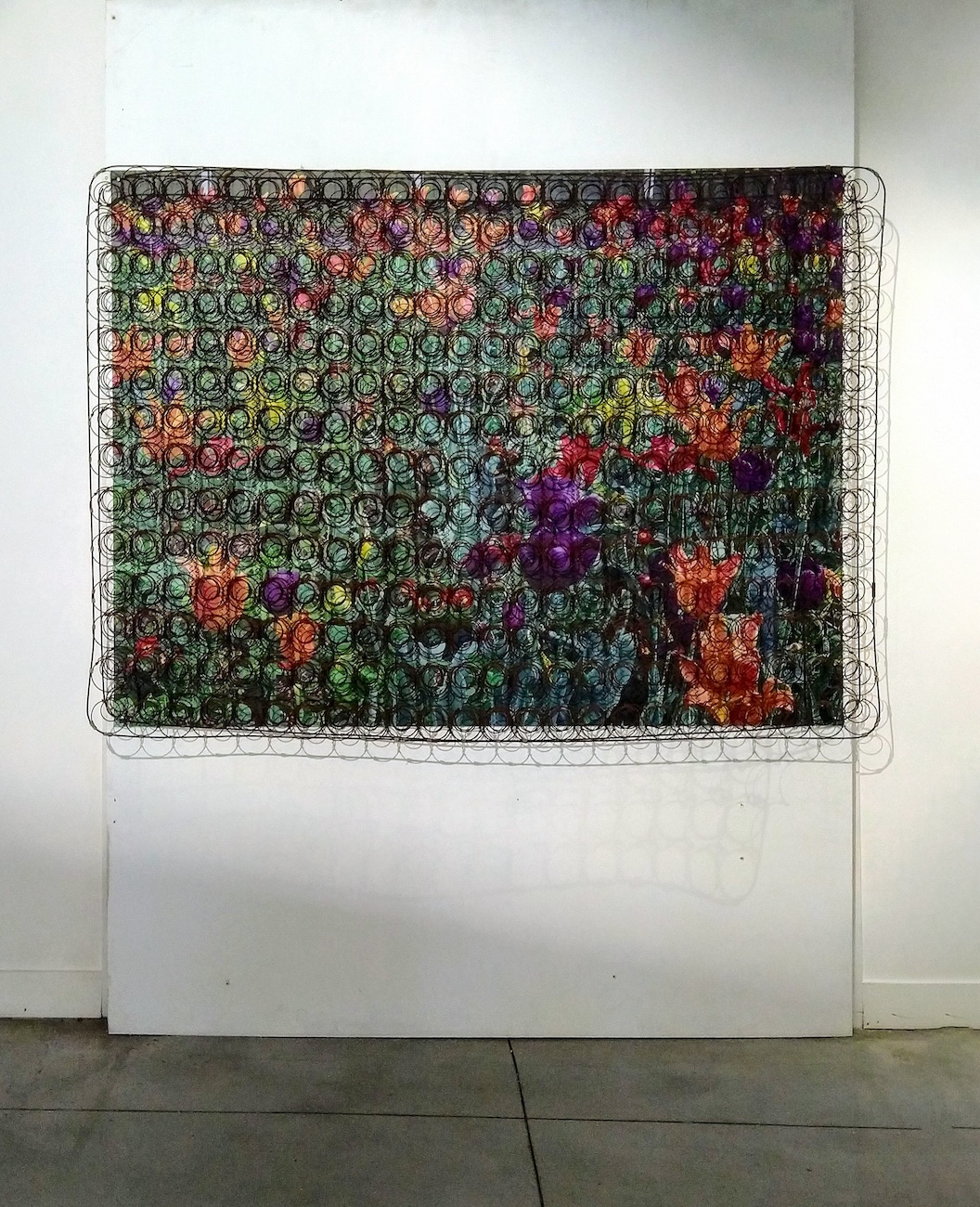
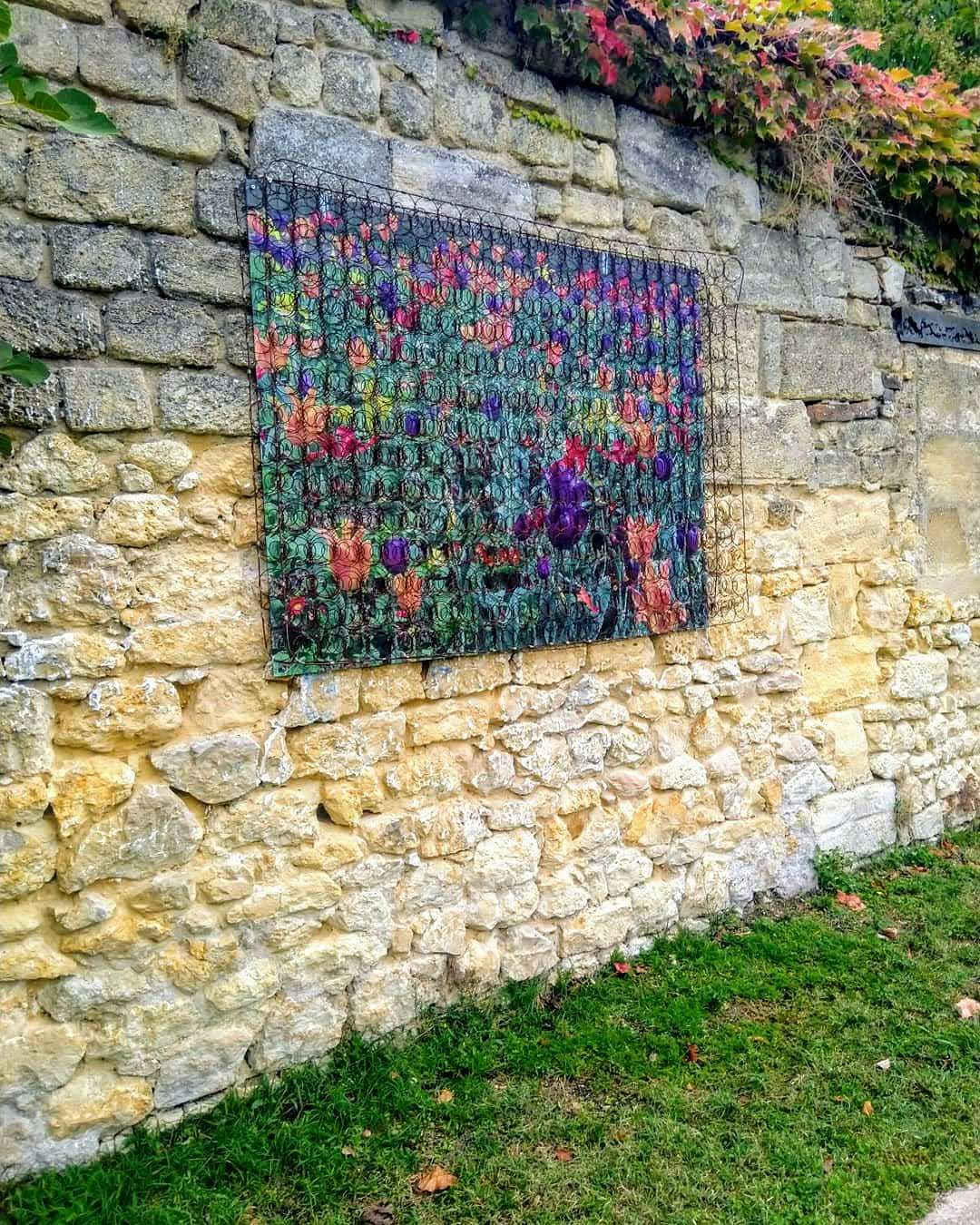
Spring bed
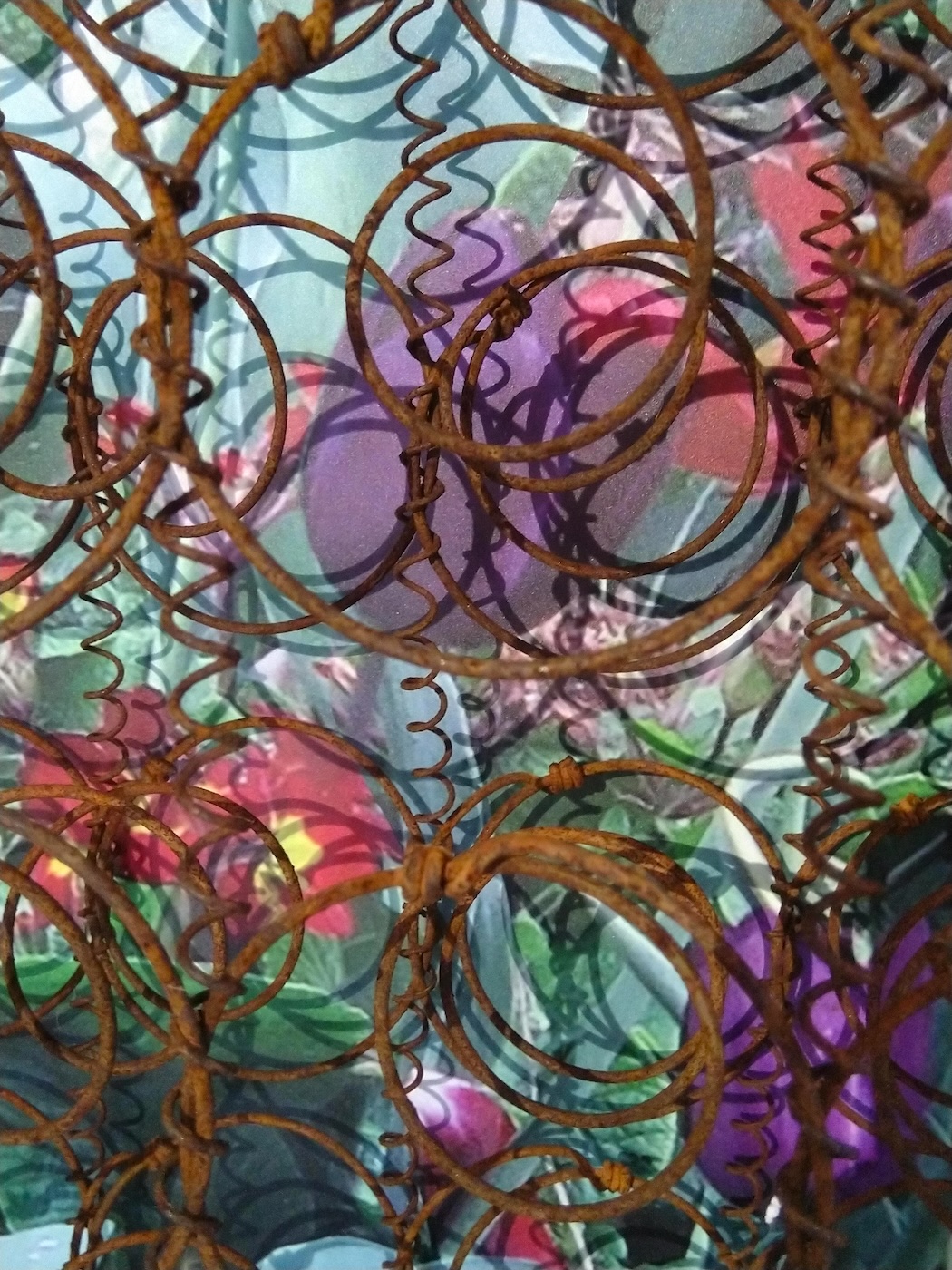
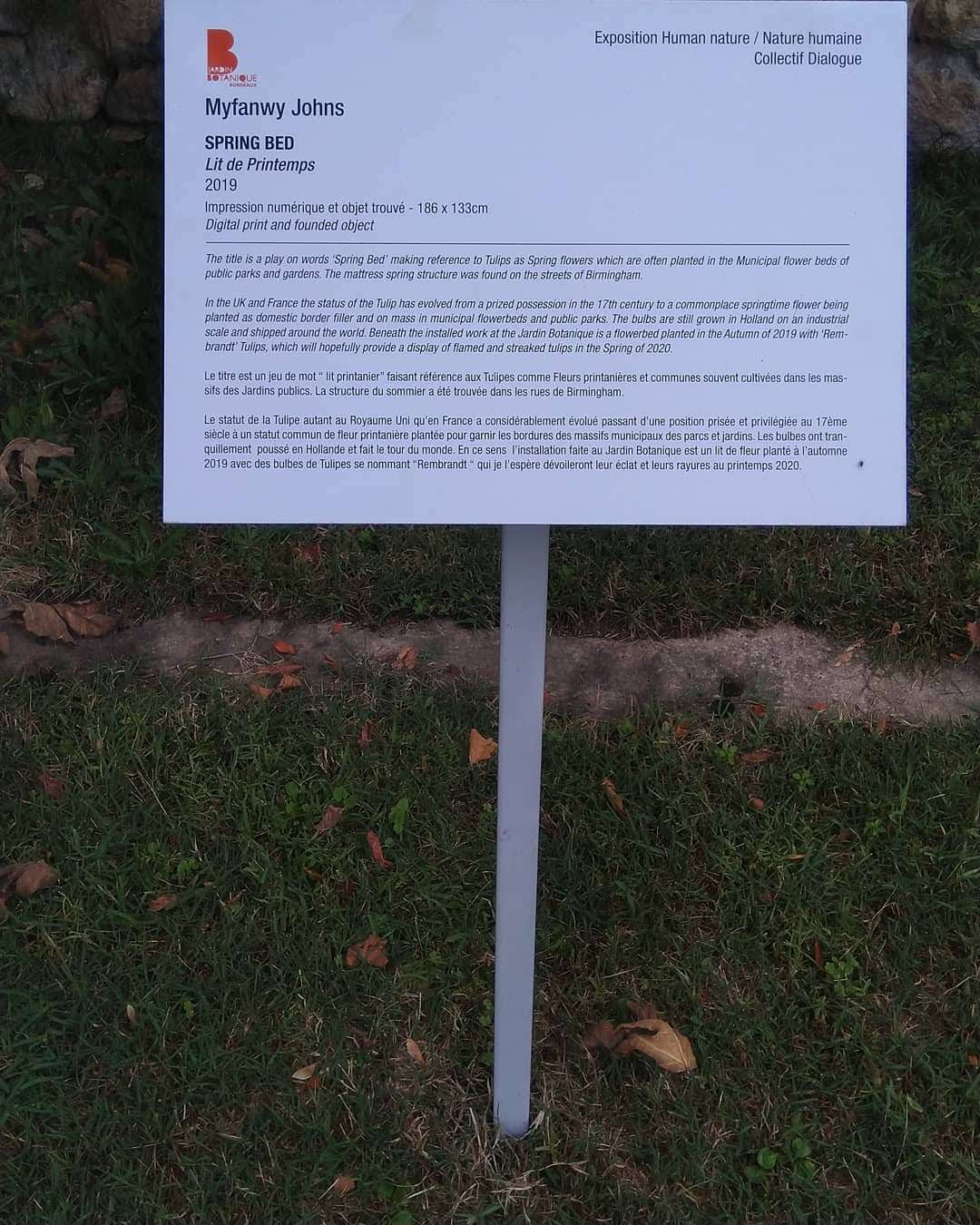
The title is a play on words ‘Spring Bed’ making reference to Tulips as Spring flowers which are often planted in the Municipal flower beds of public parks and gardens. The worthless spring structure was found on the streets of Birmingham once someone’s valued mattress.
In the UK and France the status of the Tulip has evolved from a prized possession in the 17th century to a commonplace springtime flower being planted as domestic border filler and on mass in municipal flowerbeds and public parks. The bulbs are still grown in Holland on an industrial scale and shipped around the world. Beneath this installed work at the Jardin Botanique, Bordeaux is a flowerbed planted in the Autumn of 2019 with ‘Rembrandt’ Tulips, which will hopefully provide a display of flamed and streaked tulips in the Spring of 2020.
Spring Bed,at Talence Arts Centre, 2019, Photograph and found object, 186 x 133cm.
Spring Bed (detail)
Spring Bed installed at Jardin Botanique, Bordeaux, Photograph and found object, 186 x 133cm