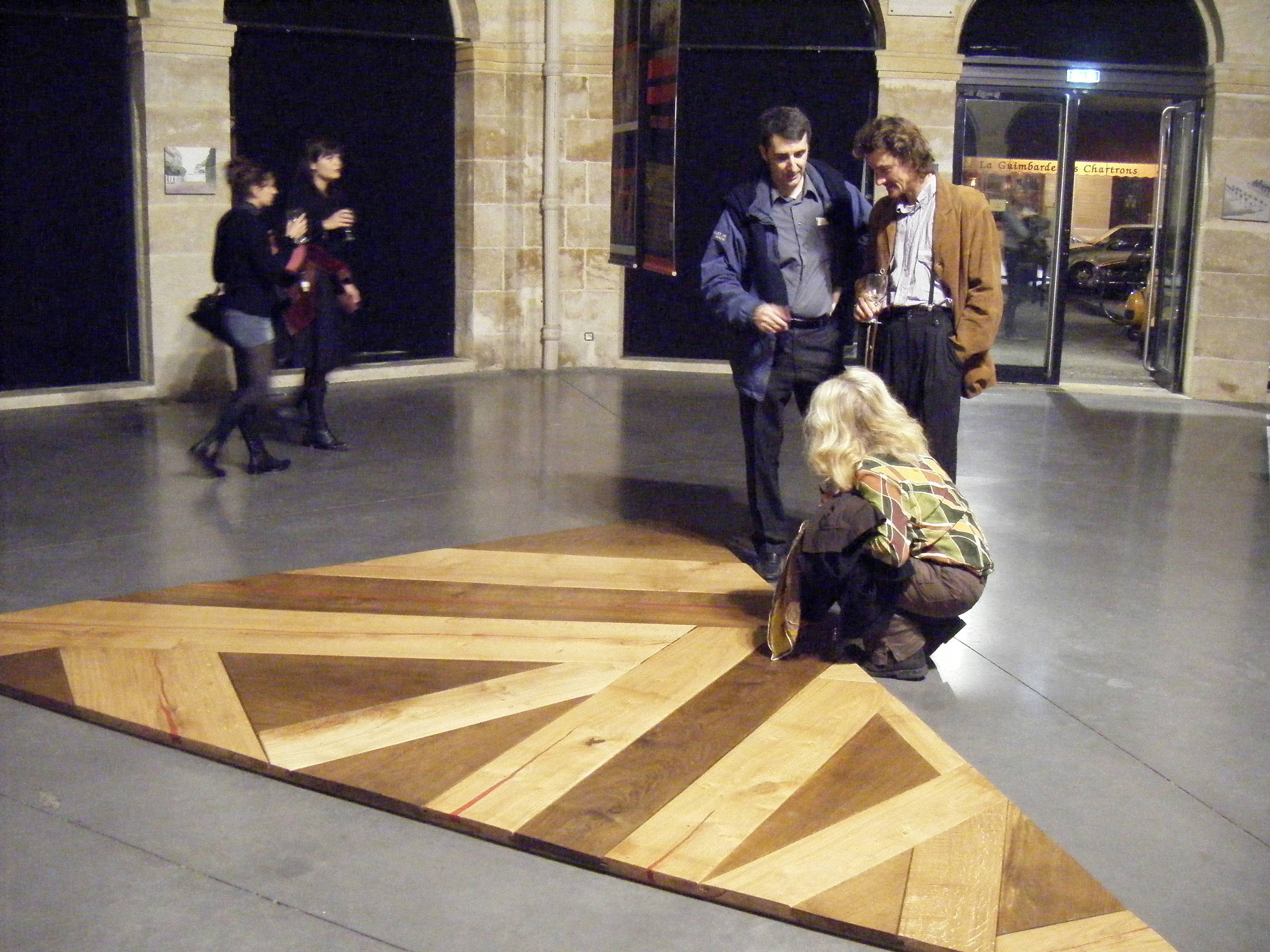
Floating Floor – a site specific sculpture made for the first Dialogue group exhibition at the Halle des Chartrons in 2010.
In 1792 the revolutionary authorities decided to build a market in the Chartrons district on the site of a former Carmelite monastery. The French Revolution lasted from about 1787 (earliest date cited) to 1799 (latest date cited). During the 19th century, an octagonal stone pavilion was built in the centre of the square. In 1869, the architect Charles Burguet, restored and chose to preserve the octagonal building. In 1998, the hall was updated and transformed into a cultural venue for the City of Bordeaux.
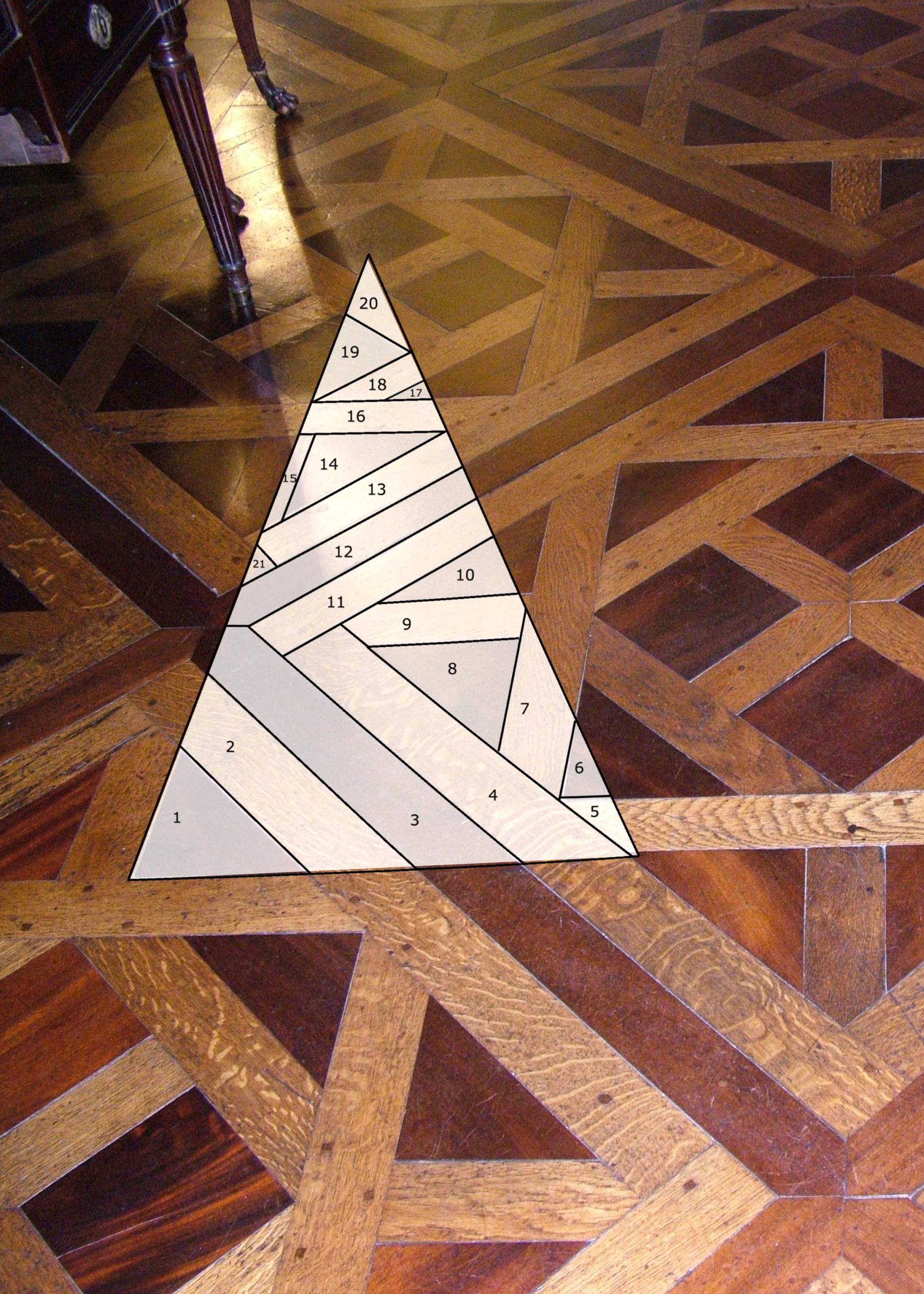
I created a triangular shaped floor section that proportionately echoed one of the eight sections of the Octagonal groundplan. As the market hall was originally conceived in 1792 I researched the floors of nearby bourgeois buildings. The Musee de l’Art Decoratif et Design – MADD was built in 1778 and I chose to scale up a section of their parquet for my floor installation. The concept of a floating floor, defined as a method where flooring is not nailed or glued to the subfloor, originated with the invention of laminate flooring as an inexpensive renovation solution for households by the Swedish company Perstorp in 1977. Over two centuries flooring design has reflected cultural change. The oak used for the installation came from wood that had felling crack imperfections. The fissures were inlaid with red resin adding a visual metaphor and connotation of the pain and bloodshed during the intervening years.