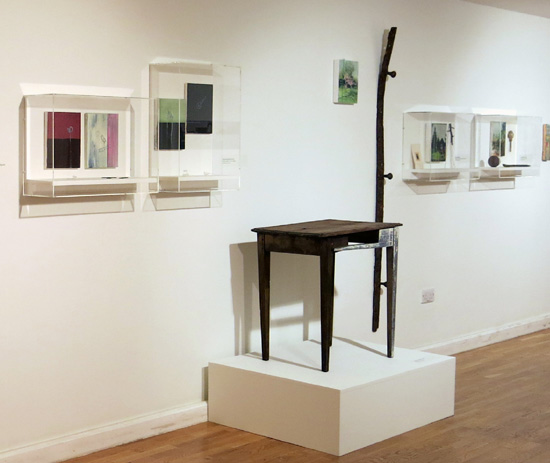
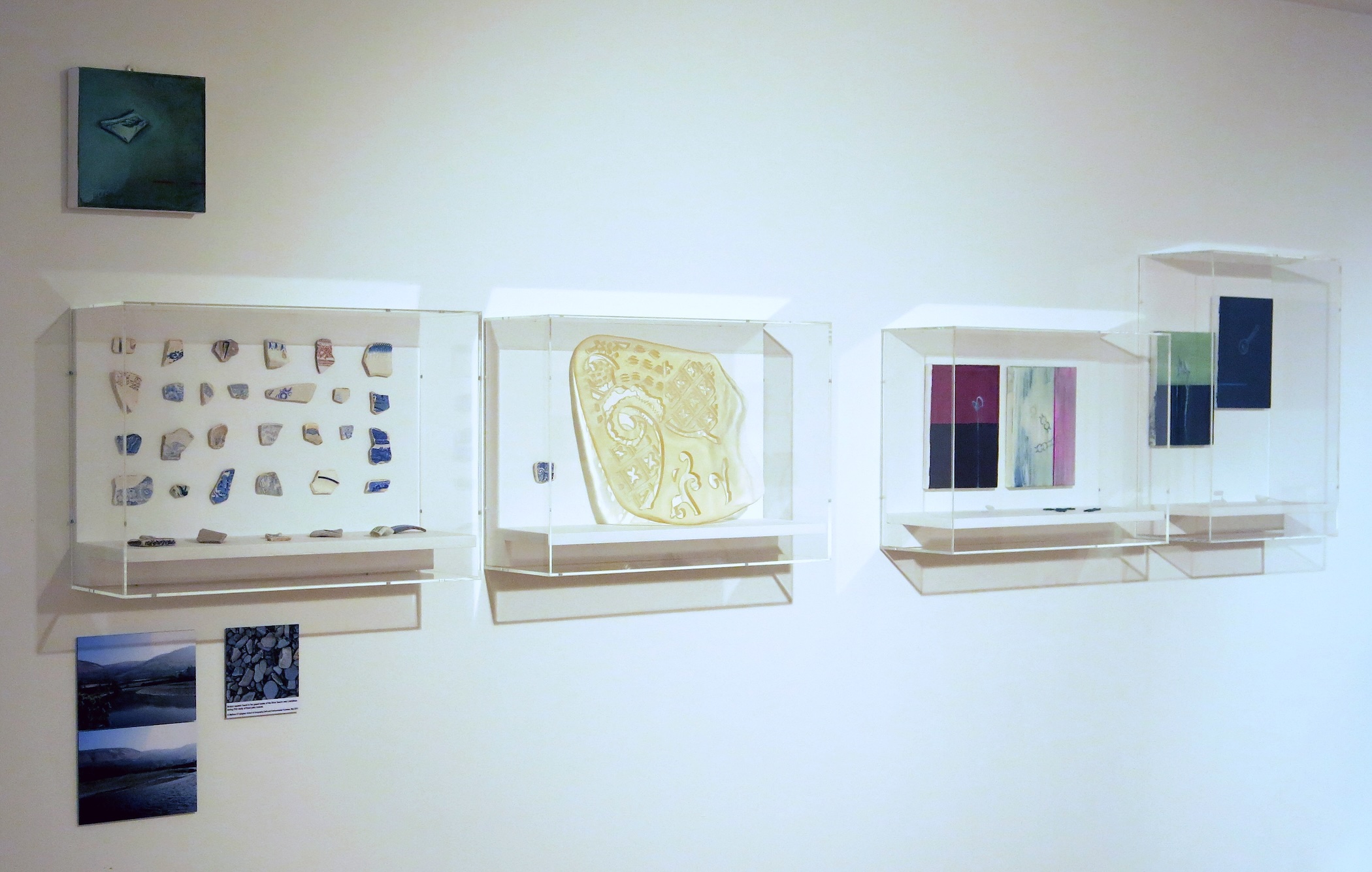
Deracinate– a Dialogue group exhibition at mac Birmingham.
I used the term ‘Deracinate’ metaphorically and in relation to objects – lost, found and relocated. To uproot an object could mean placing it in an unfamiliar environment and viewing it in a different context. When objects are moved or thrown away they are uprooted from their contingent use or functional existence. This has led me to become intrigued by objects discarded either because they are no longer useable or obsolete due to the passage of time, altering their function and significance in the world. Sometimes these objects are designed to be disposable, at other times they have reached a point in their existence where a decision has been made to destroy them. By re-presenting, I feel I am giving function back, transforming a found or lost object into art attempts to reassert its position in society.
Display is carefully considered, through placement connections are made between the objects, construing a physical and symbolic synthesis; I feel this visual connection corresponds to the conductive tissue in plants that enables flow between the leaves and roots. In biological terms, this is called ‘phloem’ where vessels are involved in translocation and transportation.
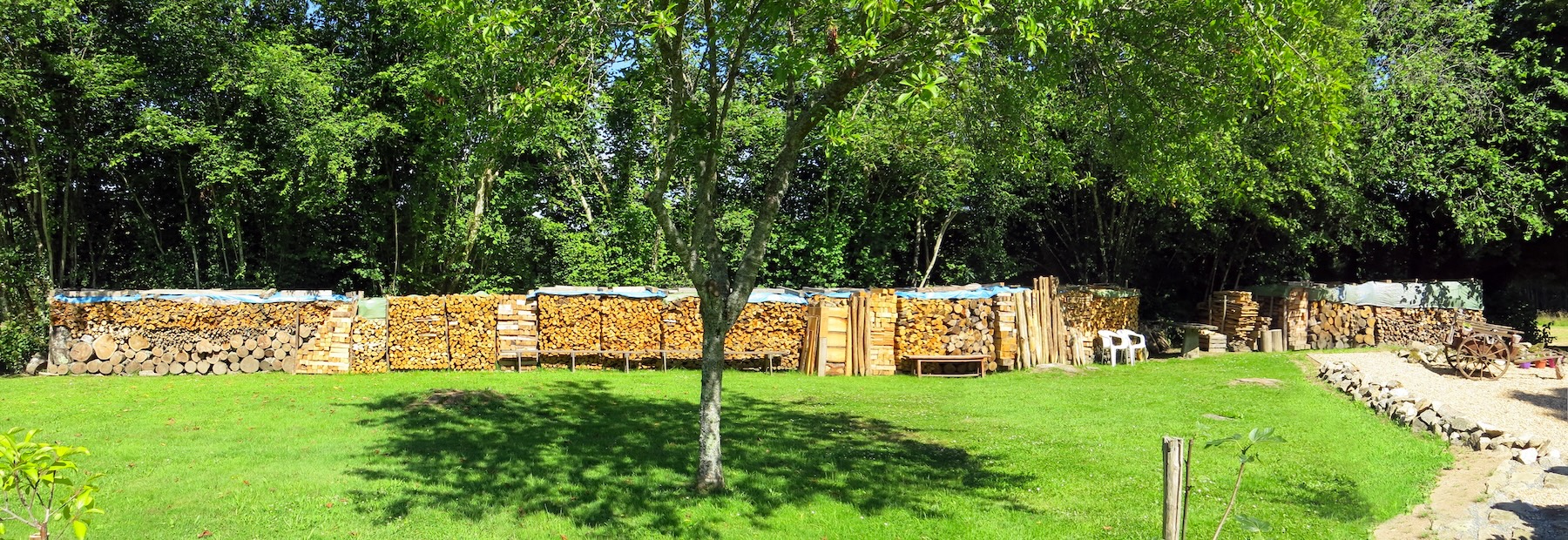
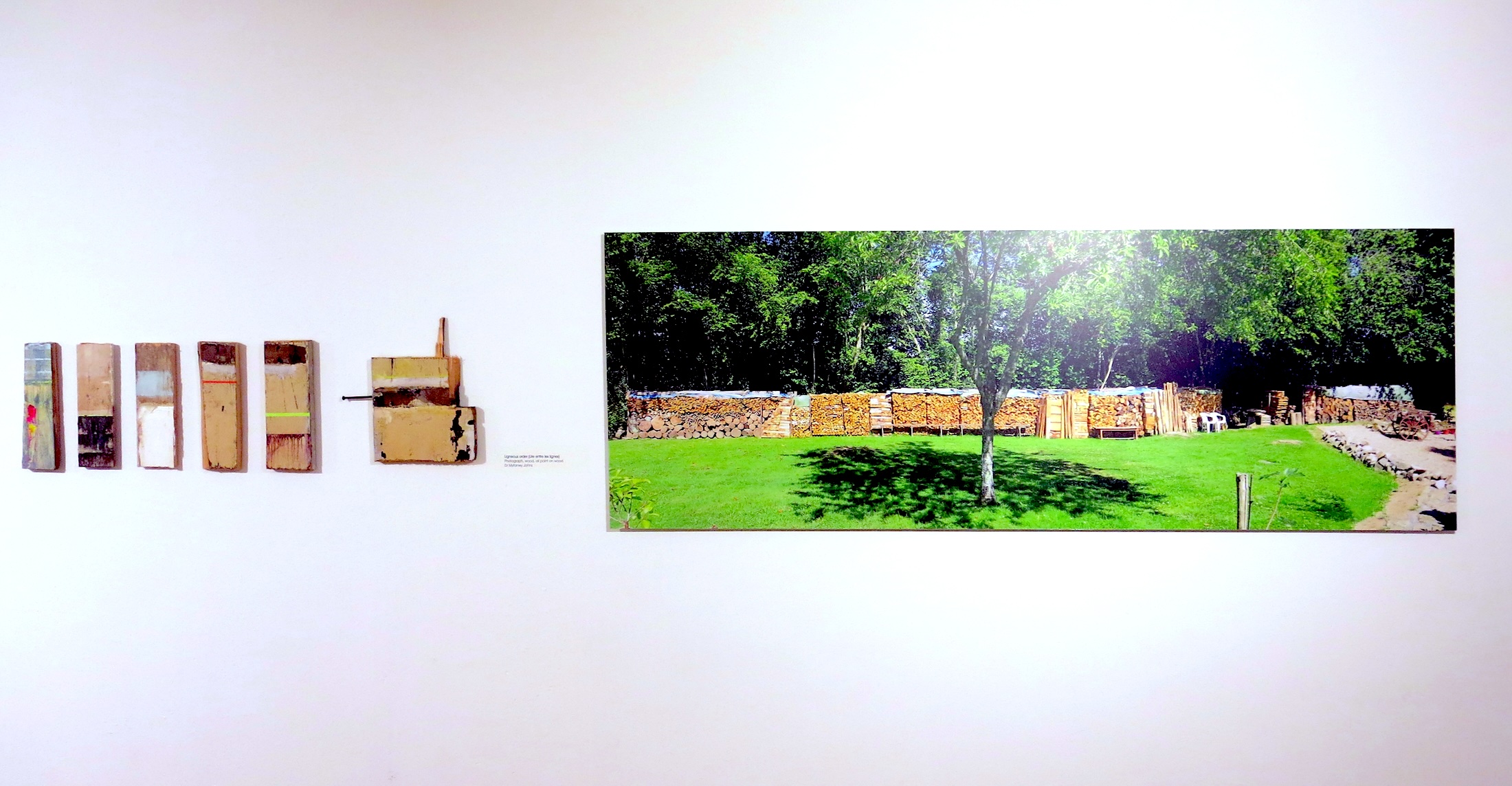
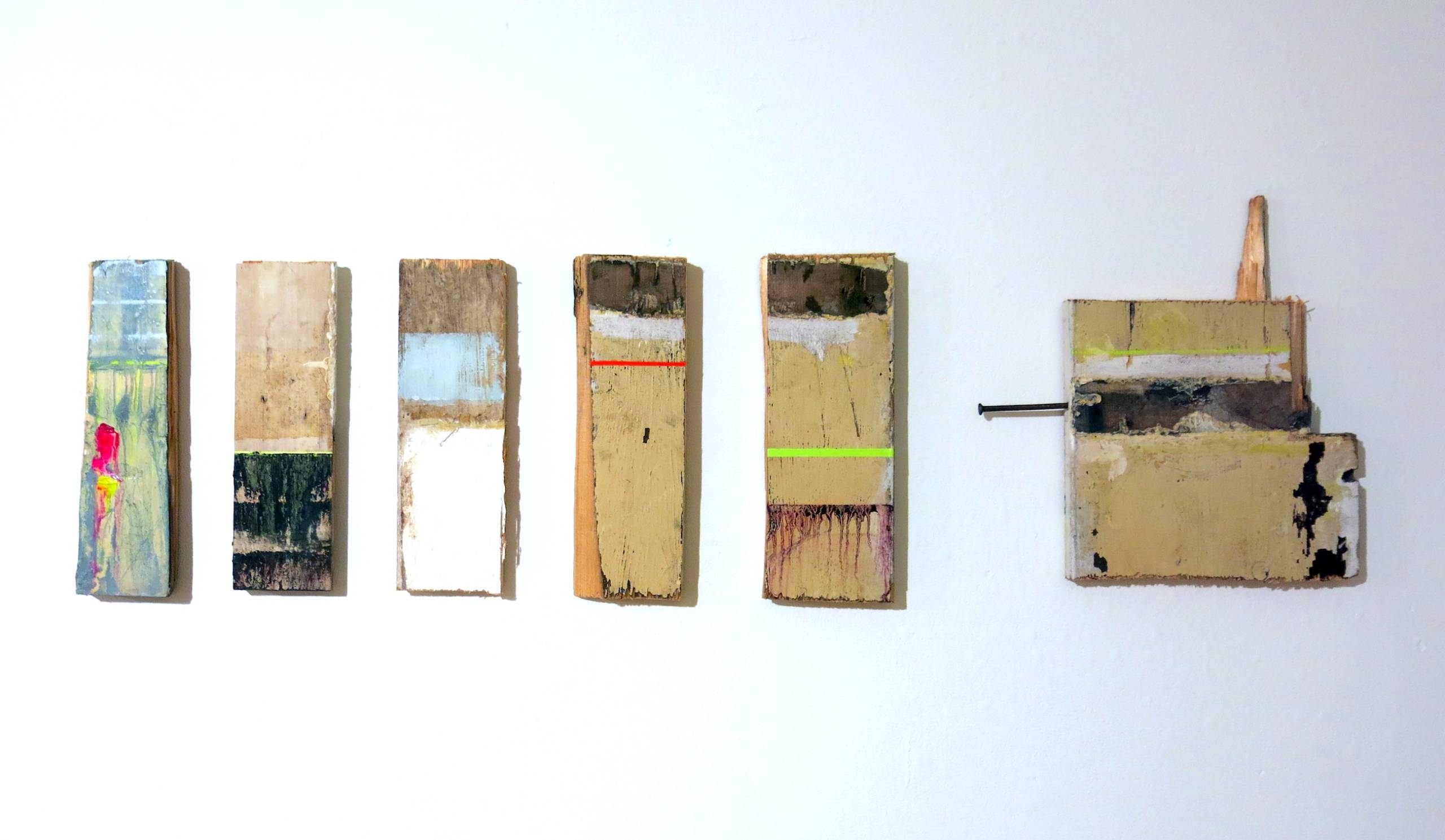
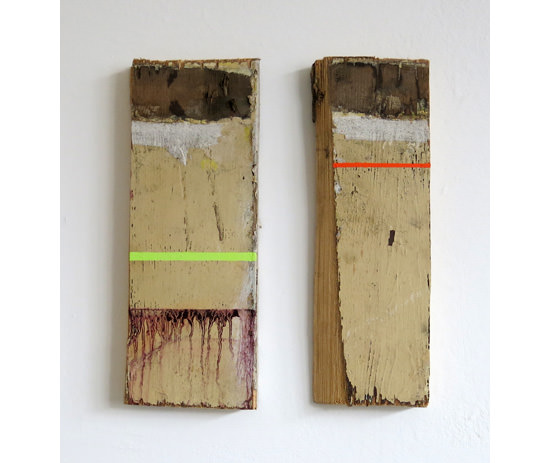
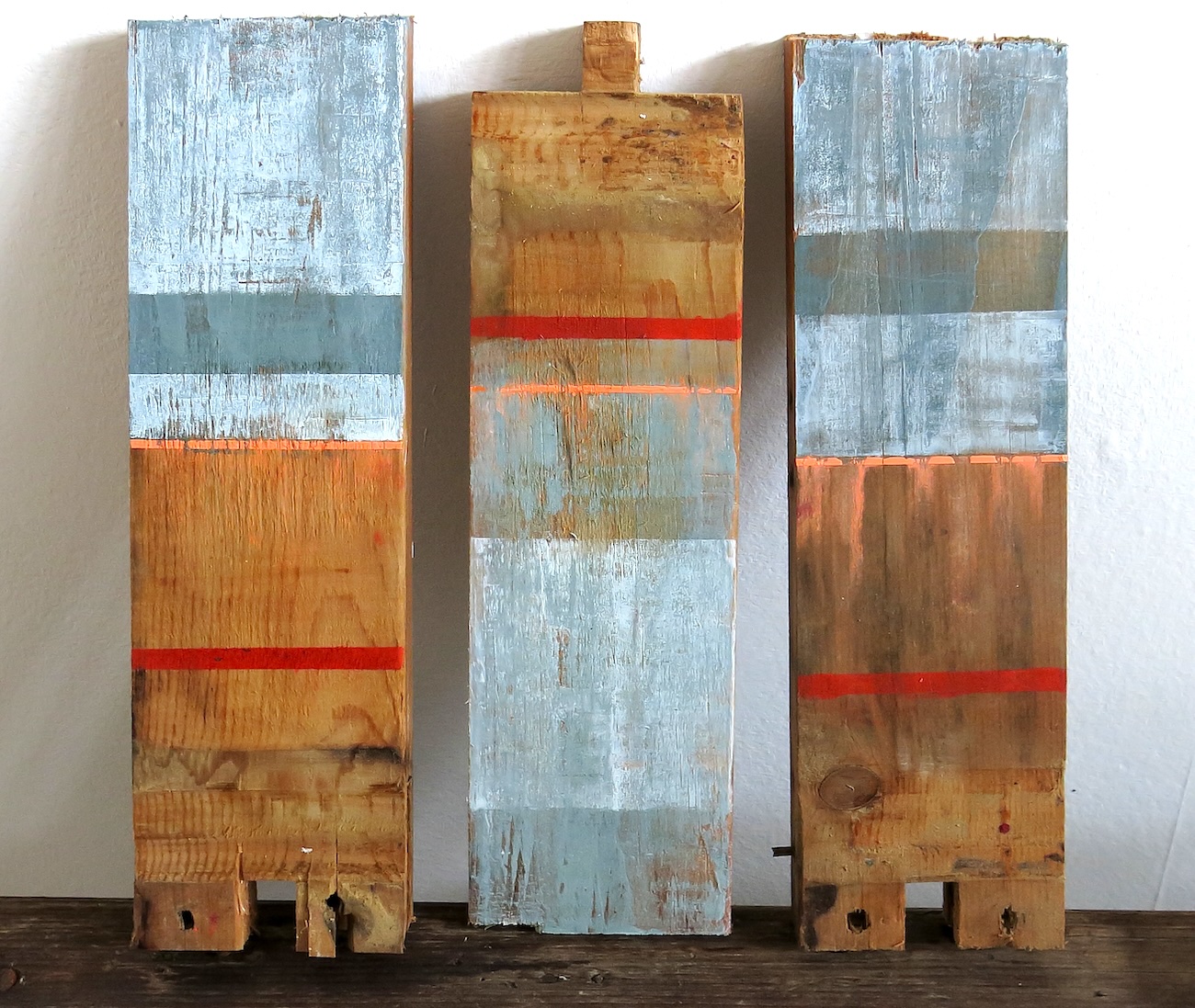
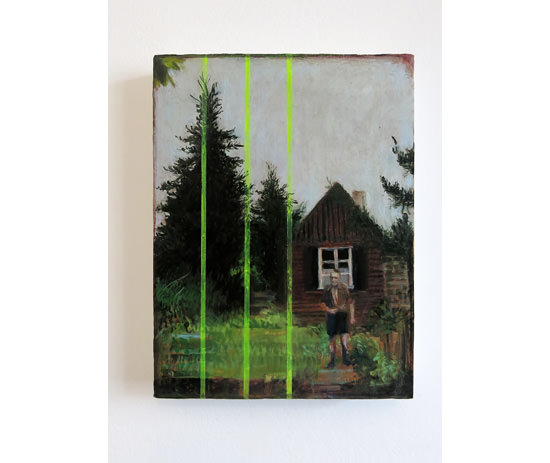
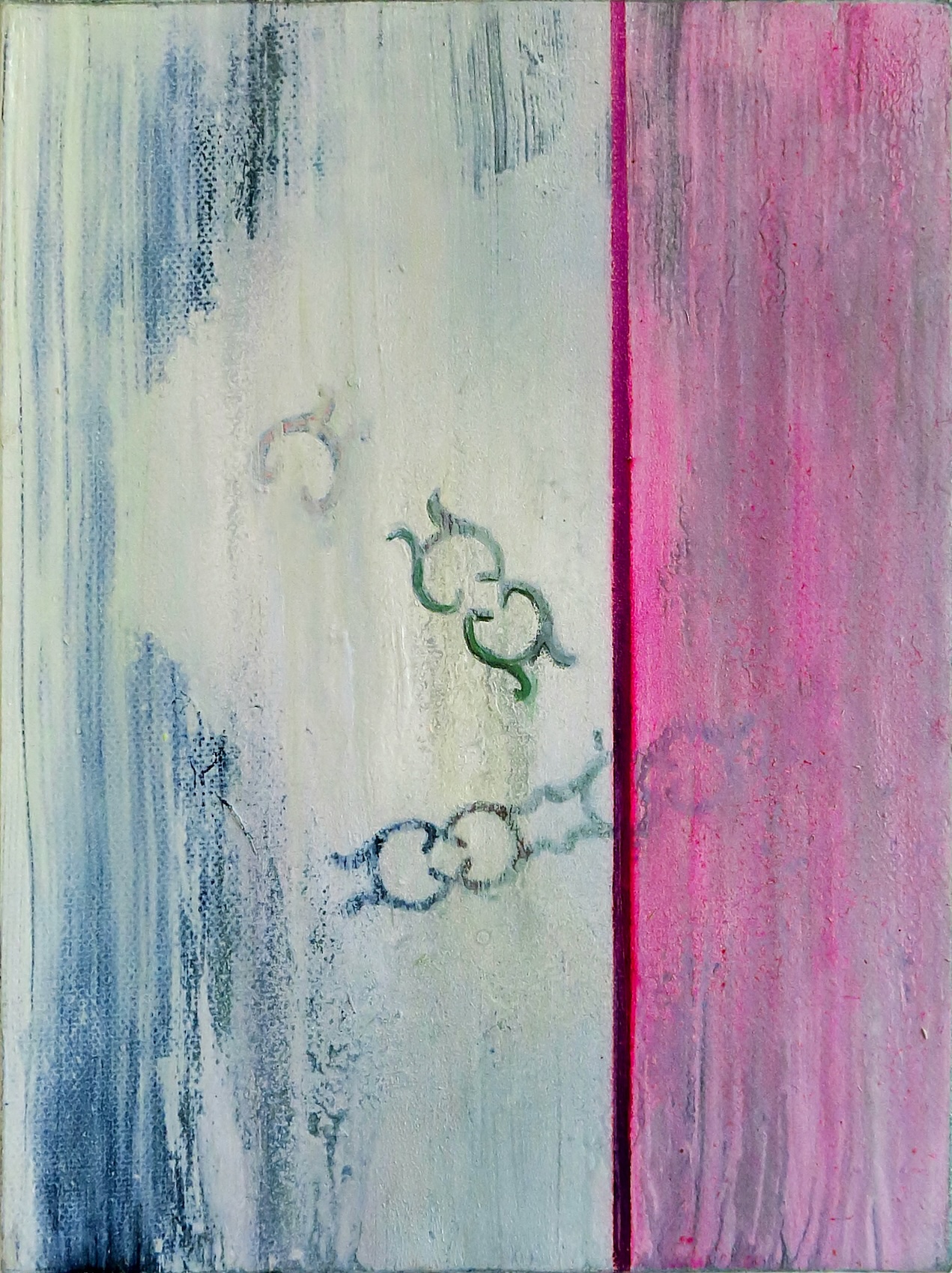
Wood is continually deracinated. I observe that the sequential utilisation of wood has become symbolic of order. From the large panoramic photograph to the found wood paintings which highlight the linear precision involved in the cutting and storing of firewood. The systematic arrangement of my French neighbour’s machine cut winter fuel store corresponds to my specific placement of paint on the surface of hand sawn wood, found on the pavements then randomly used for kindling in Birmingham.
In keeping with previous Dialogue projects where the comparative use and origin of language between French and English became important, here I have explored the French word ligne for line,it is close to the Latin derivation of lignium meaning both wood and gather.
There are other uses of the French word ligne that I like in connection with the concept of this work. For instance, I have entitled ‘Ligneous order’ in French as ‘Lire entre les lignes’ –not a literal translation but indicating the close connection between art and meaning, where reading between the lines is important. In another example the English for ‘ligne de terre’is translated as ‘ground line’, which in artistic terms is the connection between viewpoint and the land in a composition. This lineage of ideas also corresponds to the visual connections between my other artworks. Dominic Corbal, one of the other artists in Dialogue recently pointed this out in one of our online meetings; the conversation was a good example of how working collaboratively can enhance individual creativity.
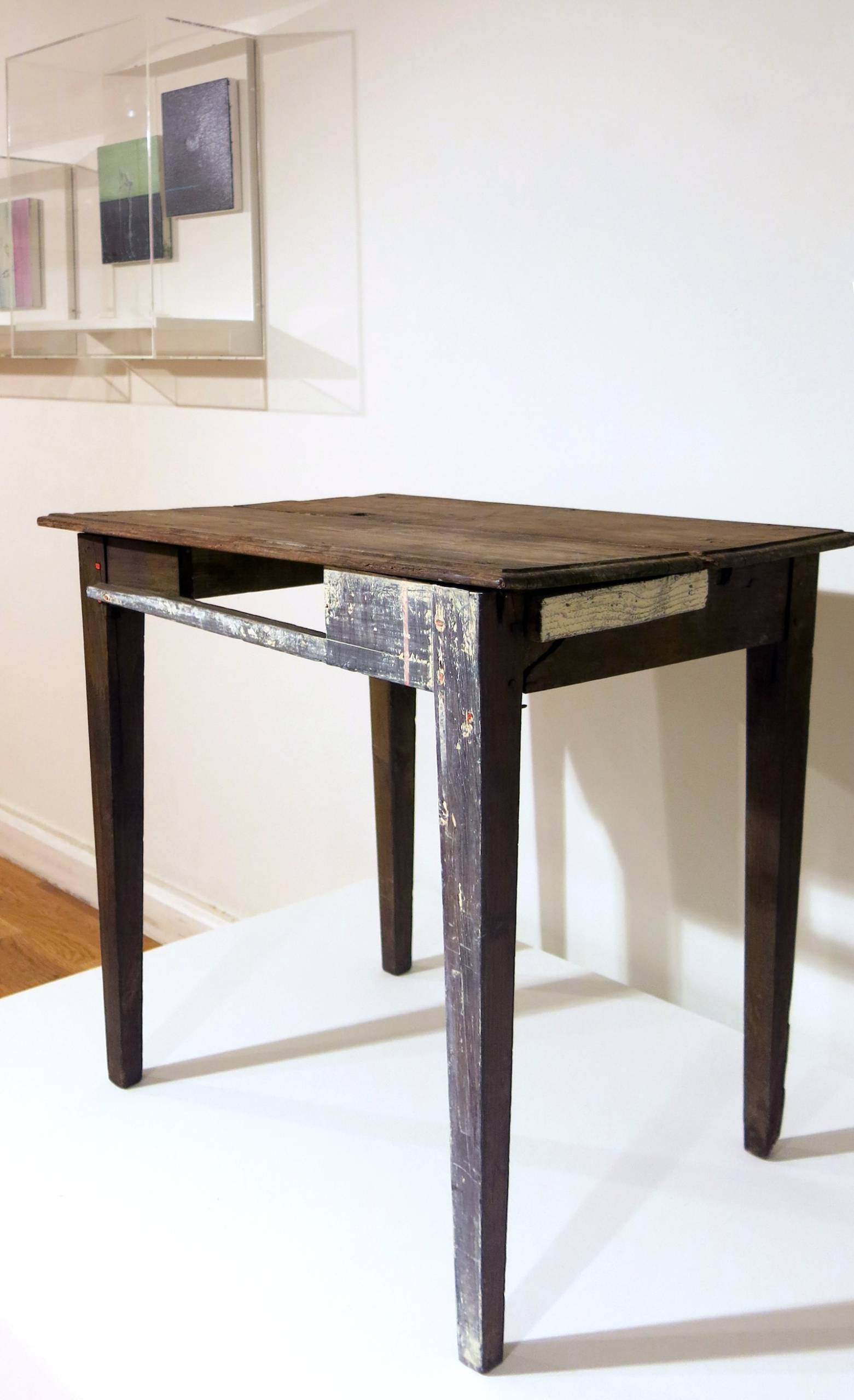
Signs of life
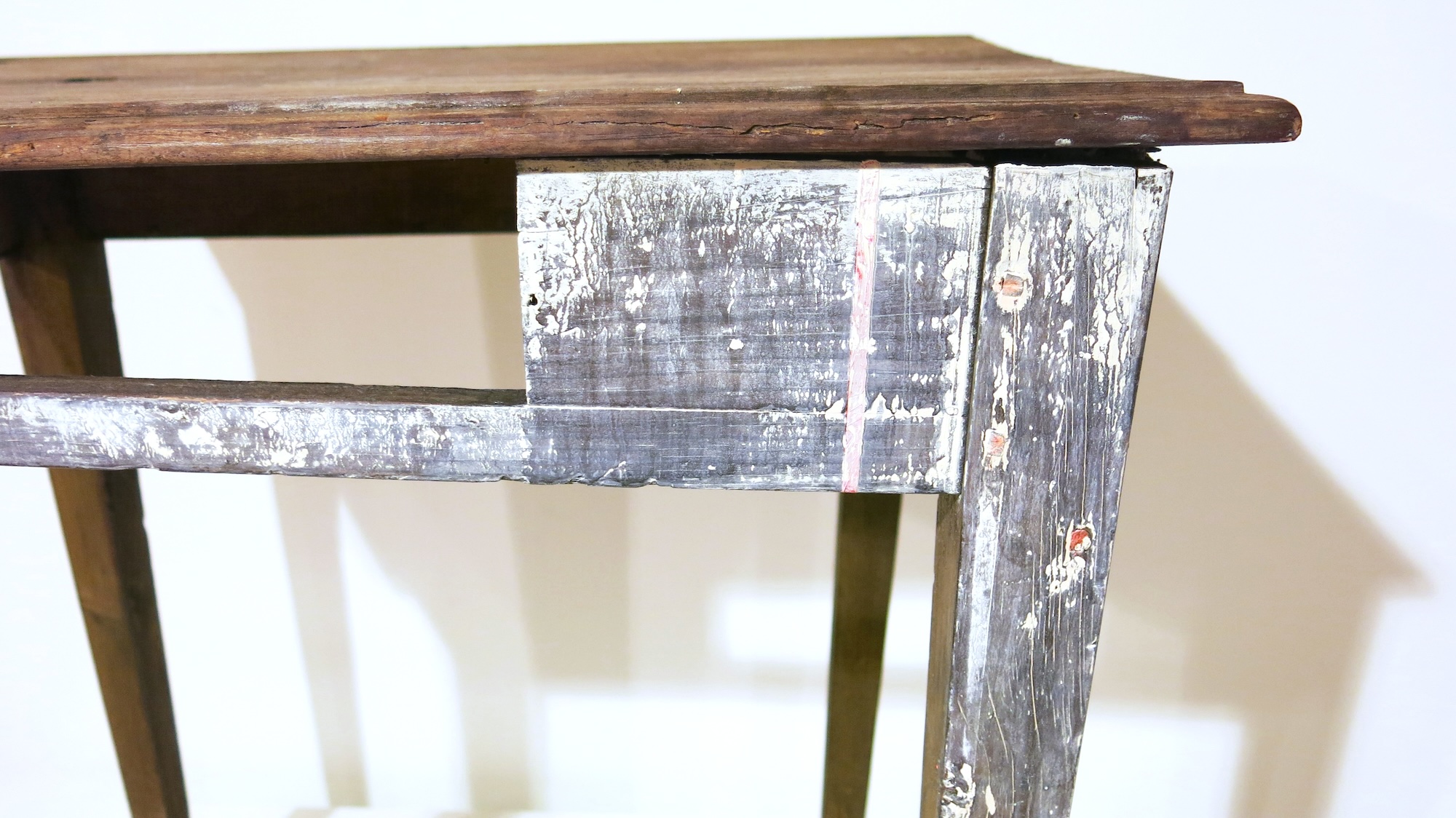
The table is part of the utilisation and life-cycle of wood series; its surface scars reveal its chequered history. It is cracked has many makeshift repairs, some people would throw it away, I would love to know how & why it survived.
Unearthed
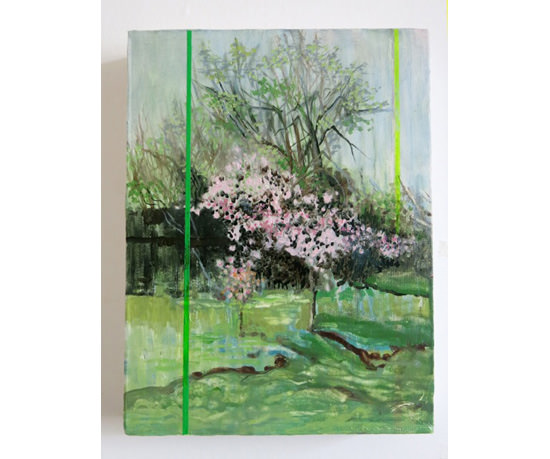
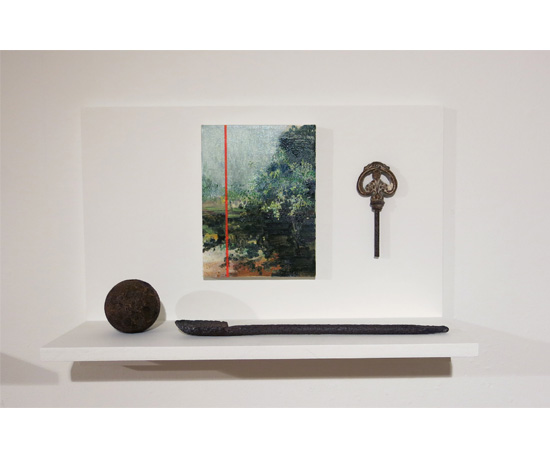
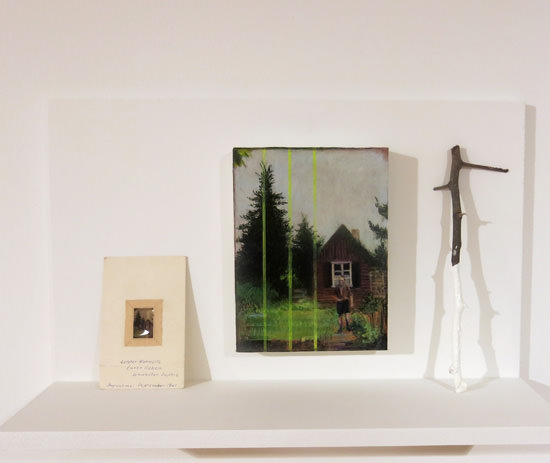
A group of objects sharing their existence due to being discovered in abandoned buildings or dug up whilst gardening. ‘Peach tree & bed iron‘ shows a long rusty metal object discovered whilst planting a peach tree in France. ‘Pear tree and metal objects‘ combines a rusty metal ball, ladle and door handle. ‘Sophie’s residence‘ combines a photographic negative found in Berlin and a Pine tree stick used to mix household paint.
Mudlark
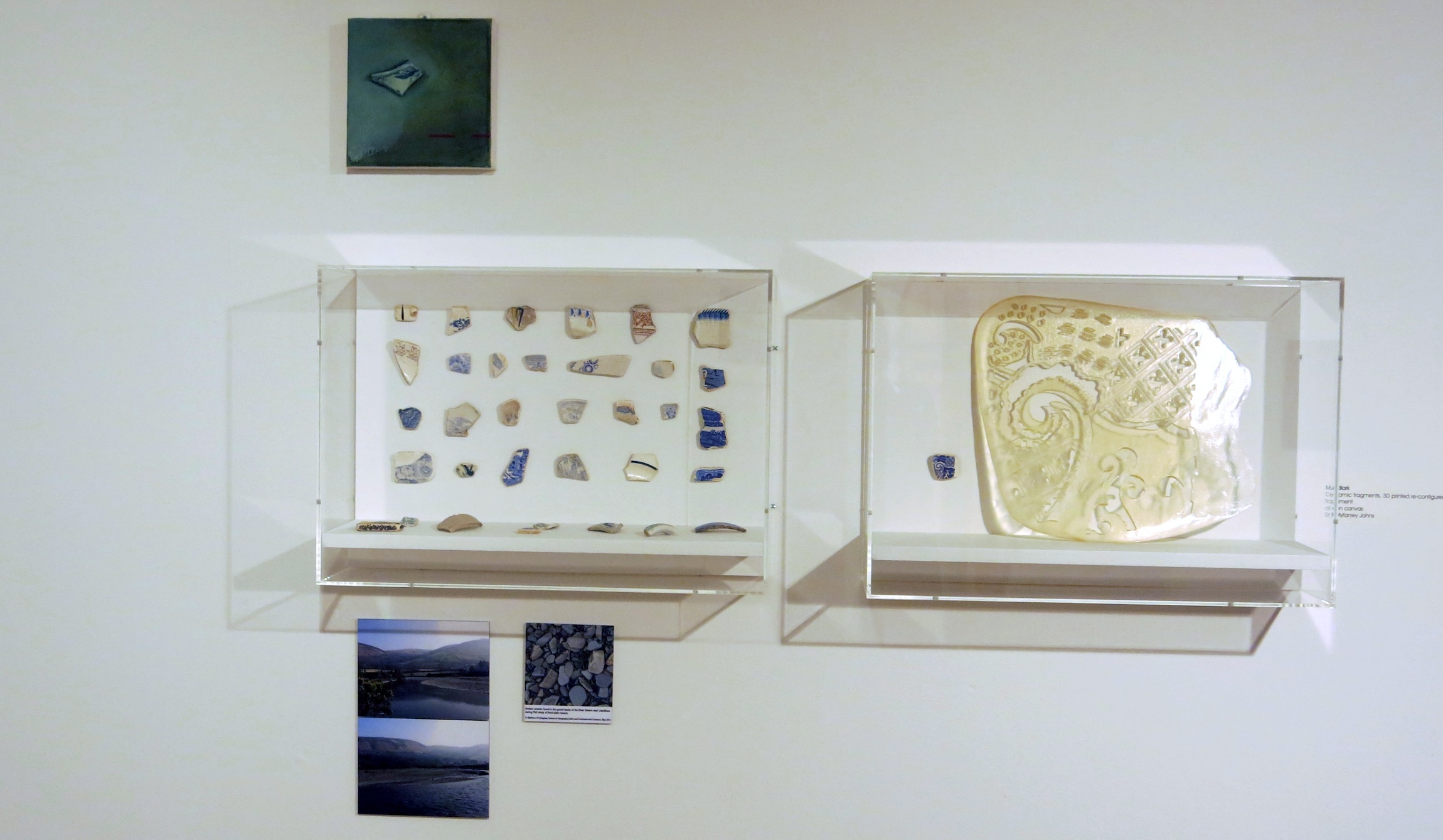
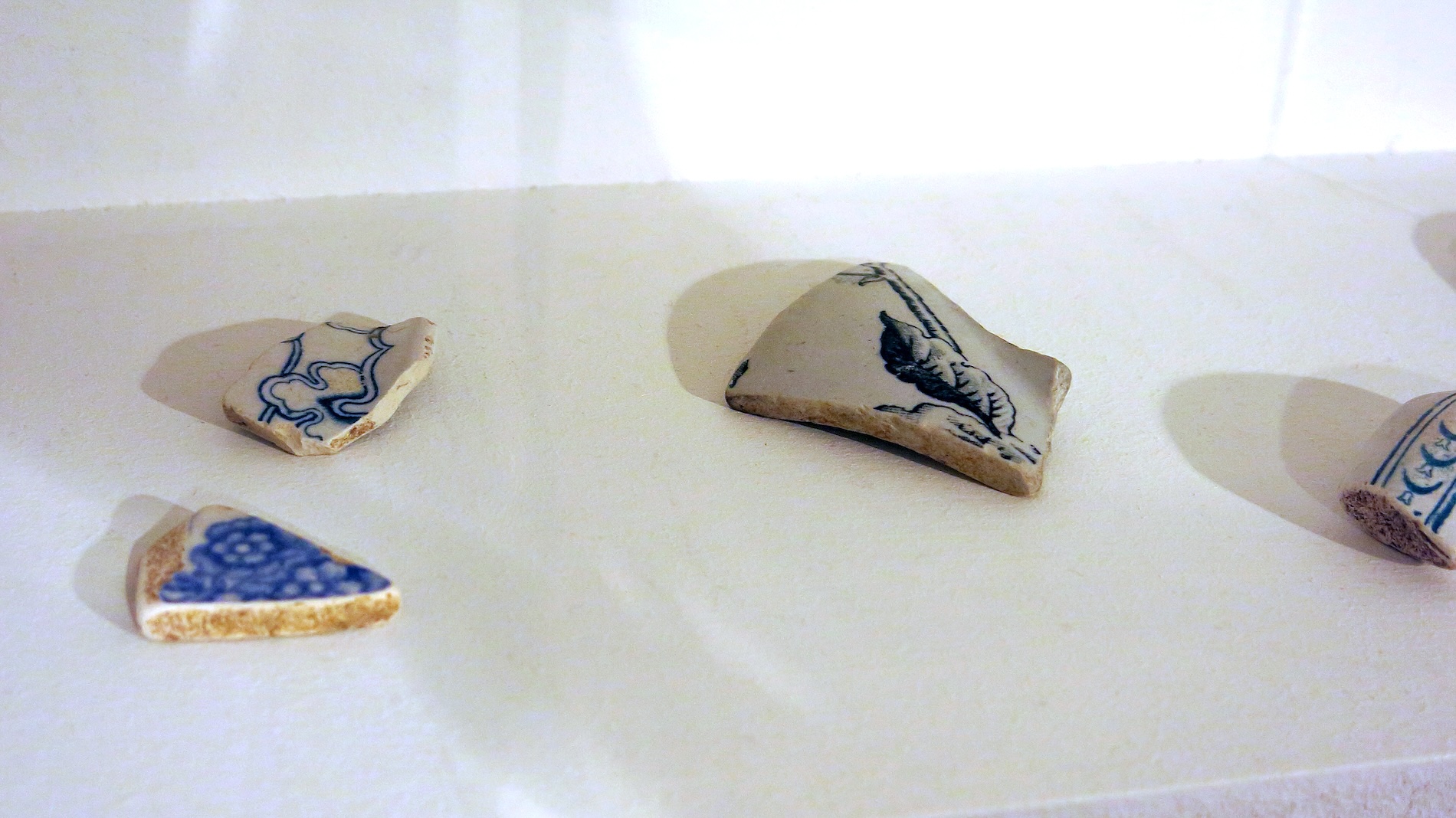
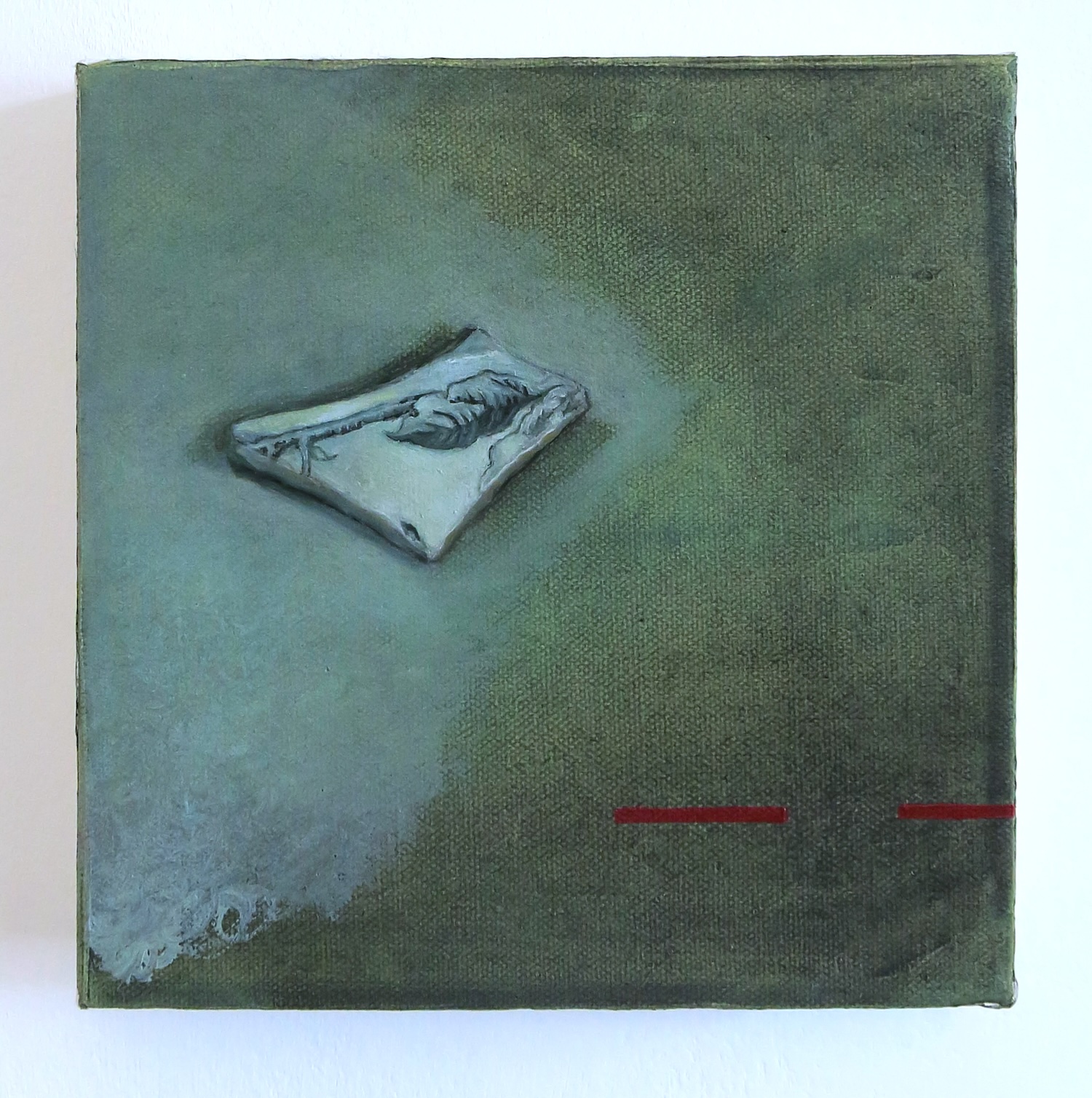
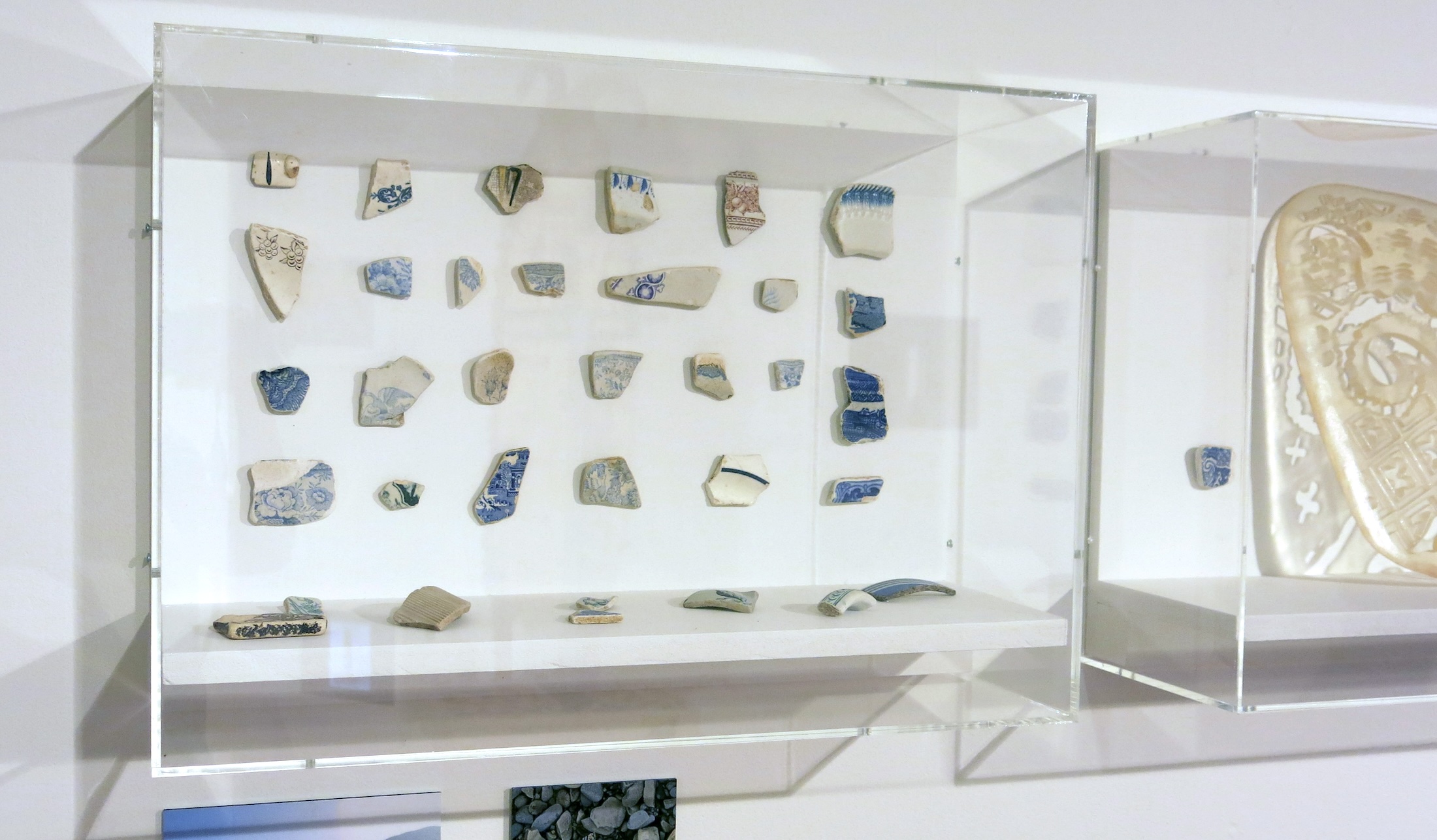
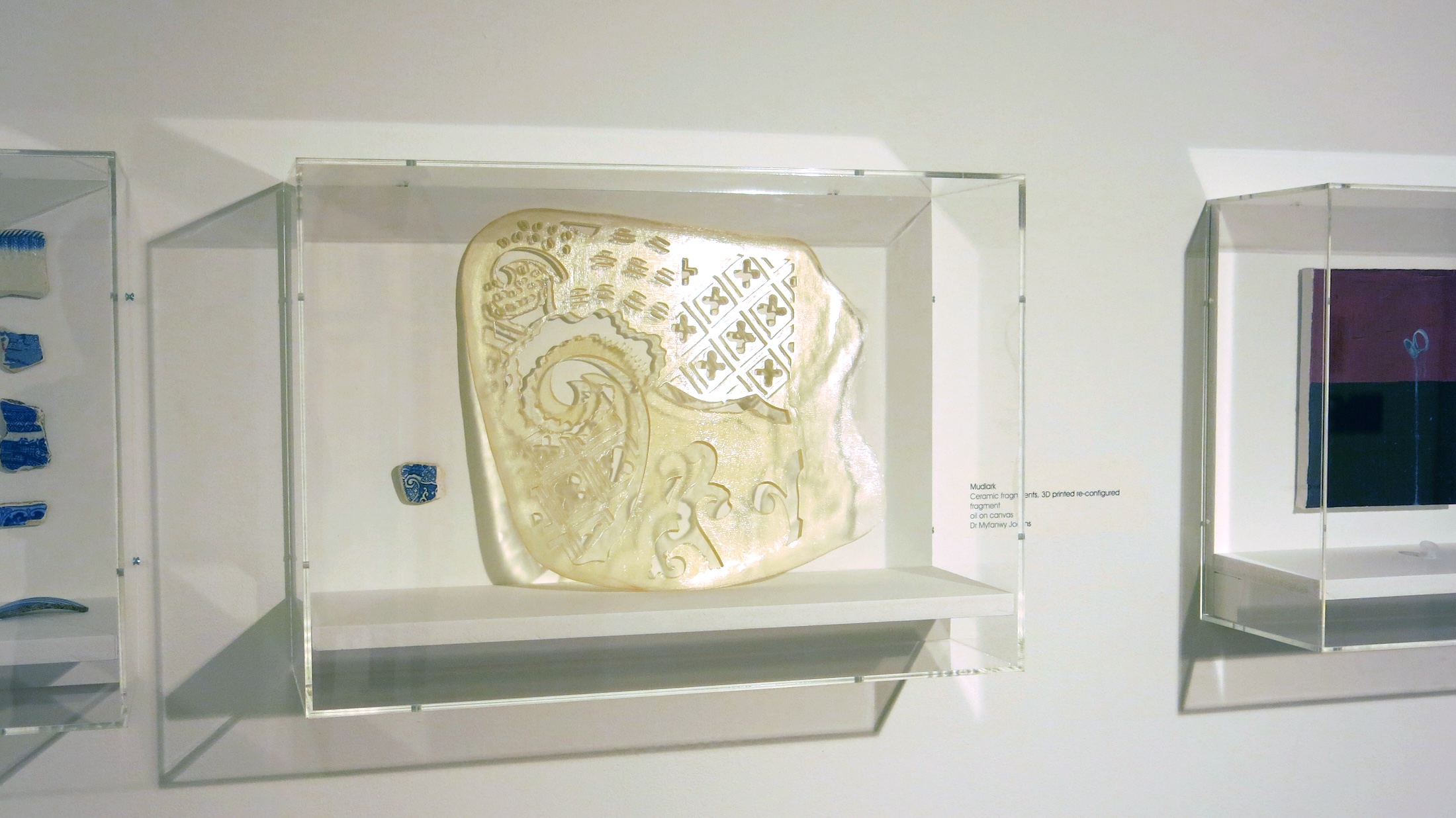
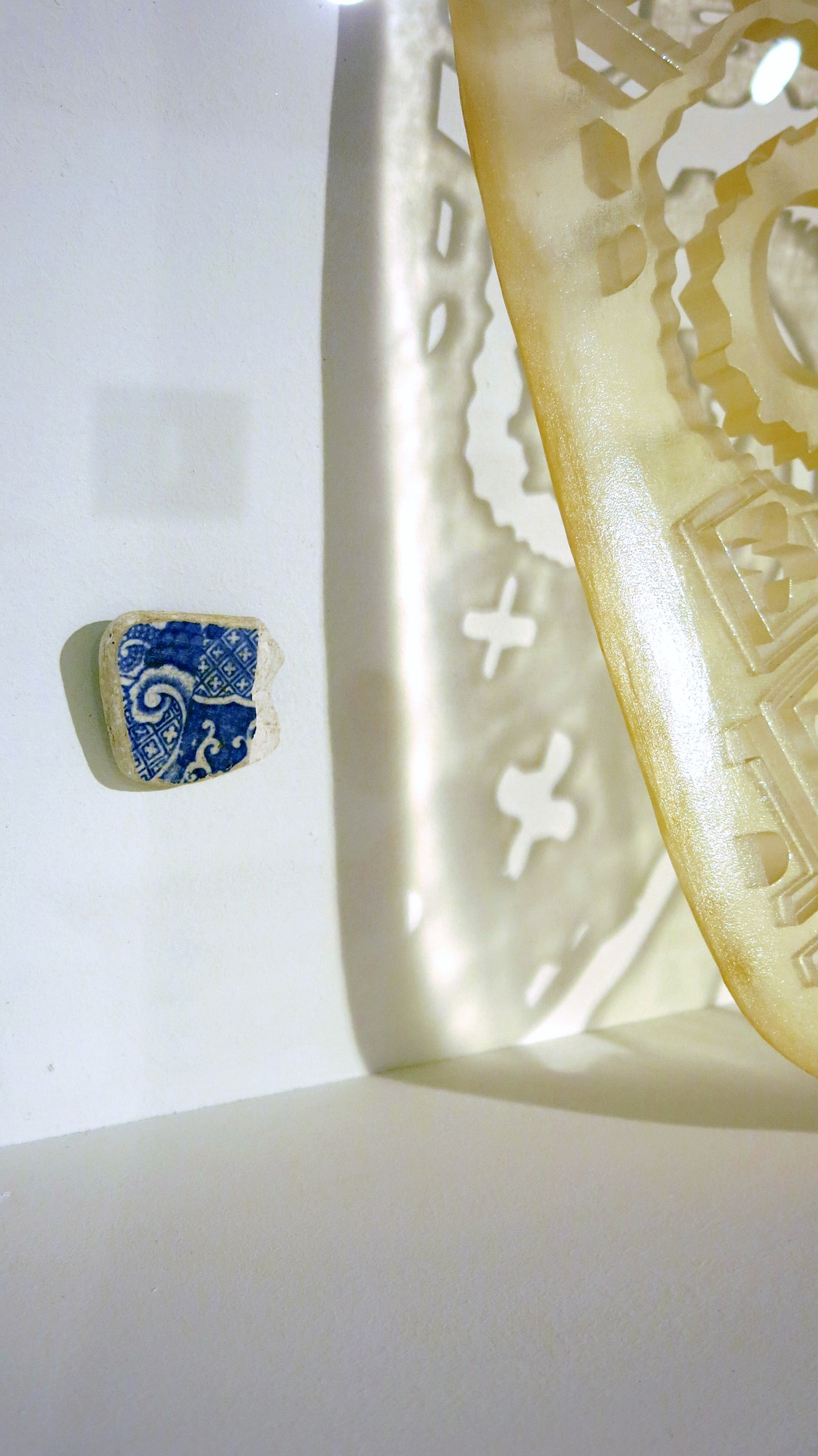
Fragments of objects discovered in a riverbed in Wales. The 18th century origin of the word Mudlark describes a scavenger combing the riverbed for anything of value. These broken fragments were found washed up in a Welsh riverbed probably unearthed from an old midden. The fragments have a beautiful satin surface texture from being washed with water for many years. The edges are rounded and any sharp fracture has become soft and stable. The fragments take on a new aesthetic because of years of change. They have become a poetic and nostalgic fossil-like structure that encapsulates time. Through research the fragment become the starting point for analysis and transformation. Through digitally scanning the surface structure, I could then re-make the fragment at any size. Not only could I re-make the rest of the original object i.e. a plate, jug or bowl (the lost whole) but use the fragment in its isolated broken state to create an original artwork. In hindsight I realised it was the incompleteness that I enjoyed. I compared a fragment to an architectural ruin and as Robert Ginsberg claims in his book ‘The aesthetics of Ruins’ ‘What counts in the ruin is what we find, not what it is not… it links past to acommitted future by means of its presence.’
Some fragments are aesthetically more pleasing than others; it depends on the shape of the broken form plus any enclosed surface pattern. The printedpattern on the fragment is cropped and re-composed – the accidental breaking action sometimes creating a self-contained image of aesthetic delight. By re-creating the fragment at a larger scale I can turn it back into a re-configured object. As Gaston Bachelard says in his book Poetics of Space – ‘And what a great life it would be if, every morning, every object in the housecould be made anew by our hands, could “issue” from our hands’
3D printing could theoretically make the above whimsical statement a reality. With this in mind my Leverhulme funded artist residency at the Computer Science department of Birmingham University started with a fragment, a piece of domestic ceramic, lost and found, which becomes a new entity reformed through digital manipulation.
Mudlark and Poetics of Fragments documents the journey of a piece of broken ceramic discarded then found in a Welsh riverbed then transformed into an artwork.
Odds and Ends
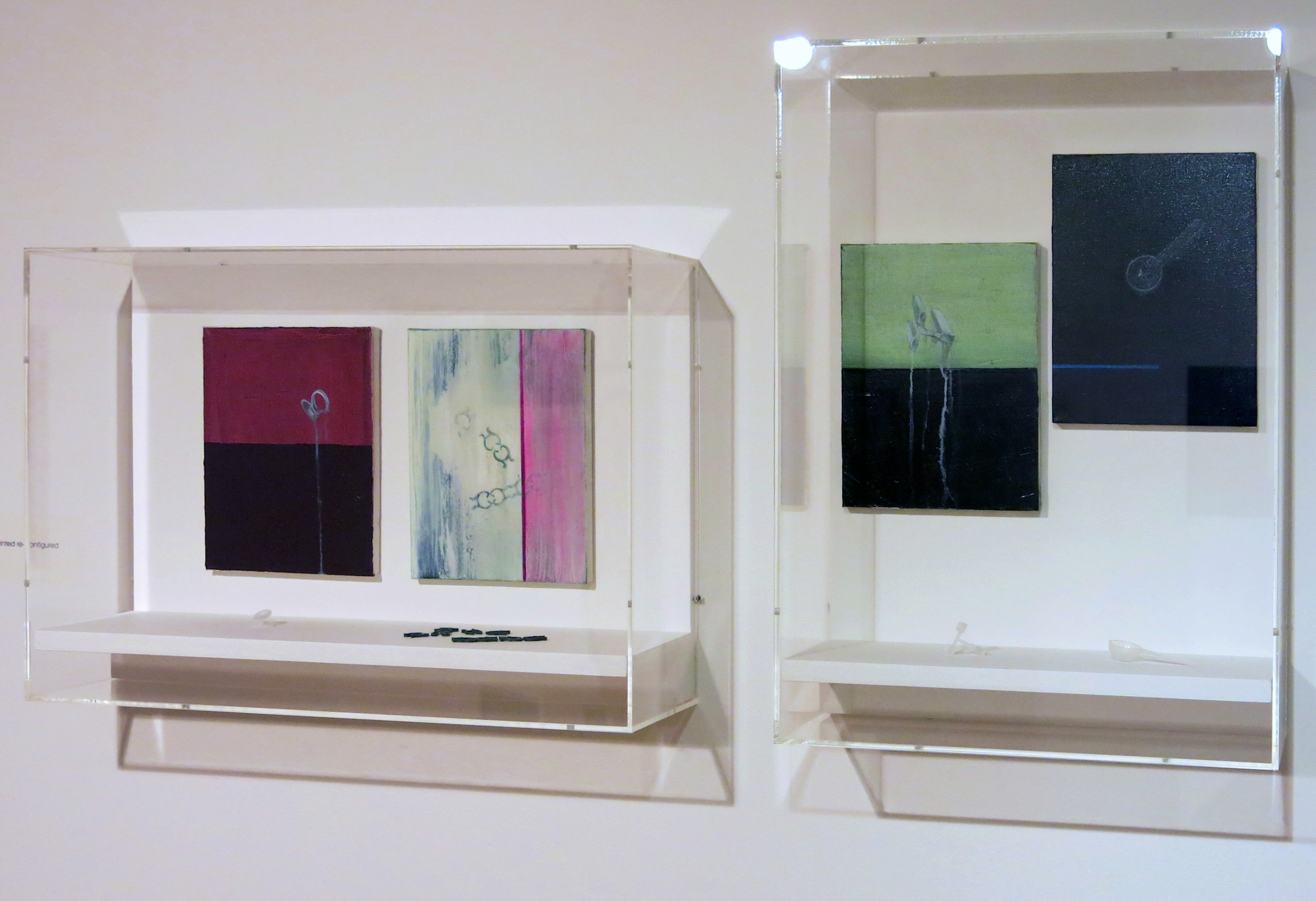
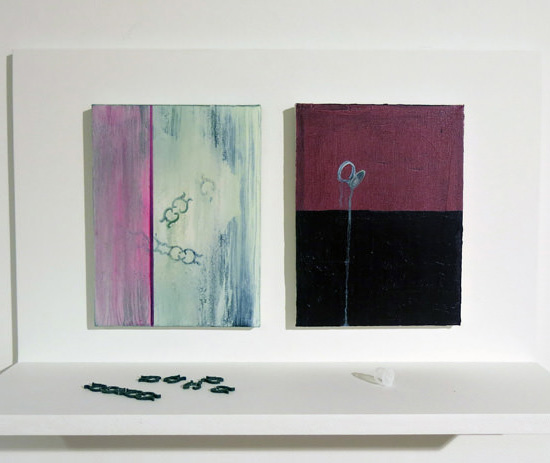
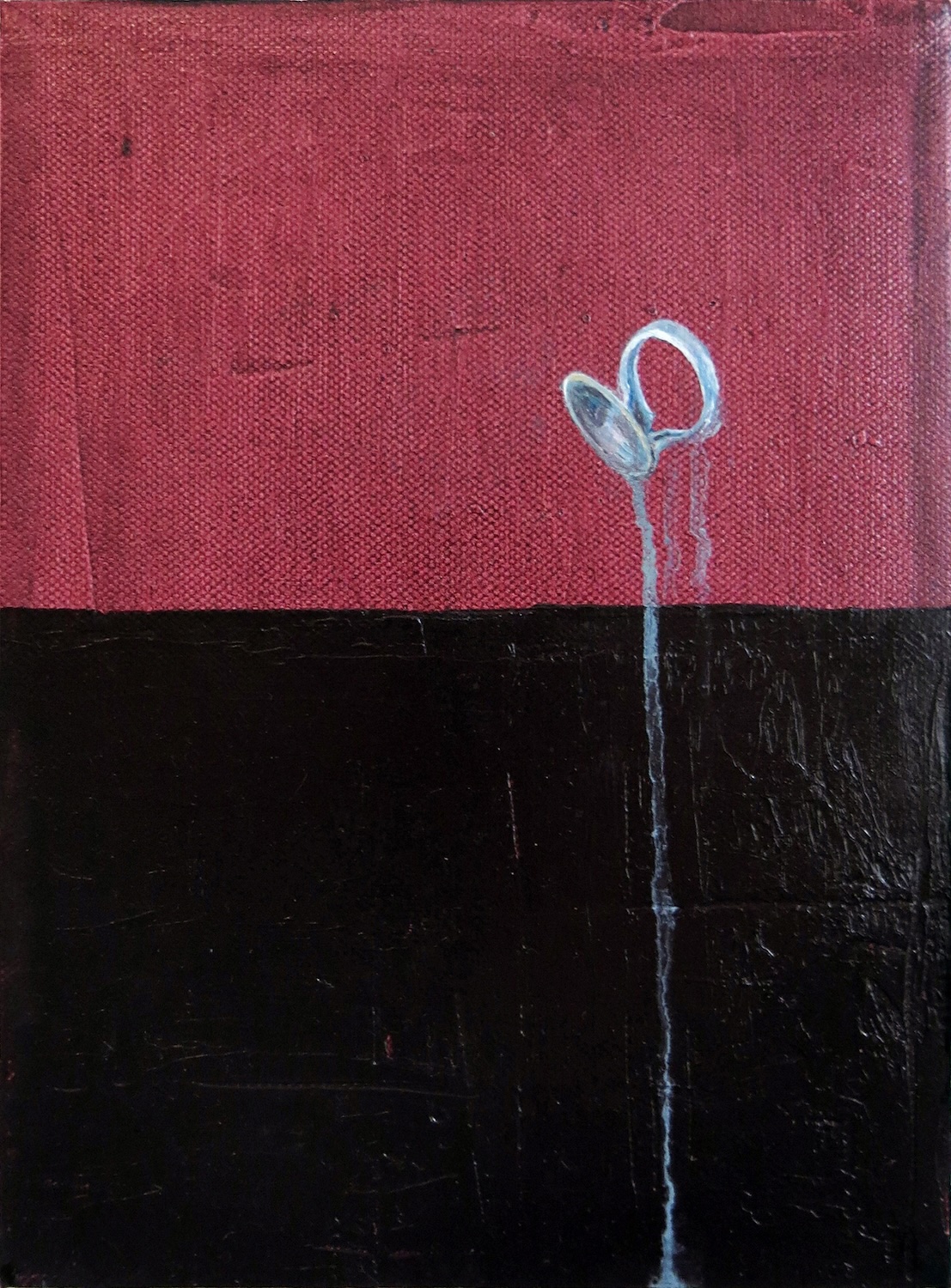
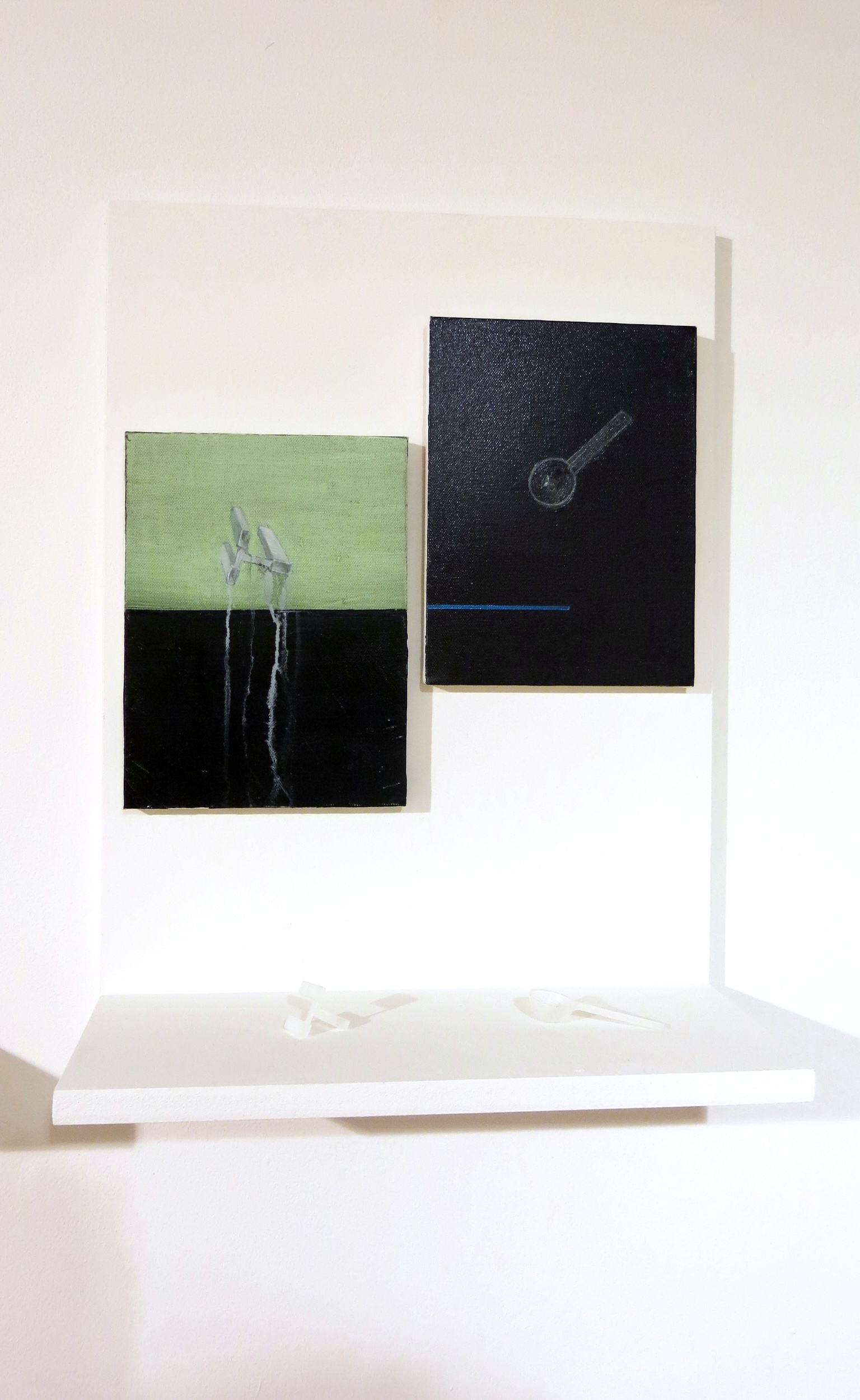
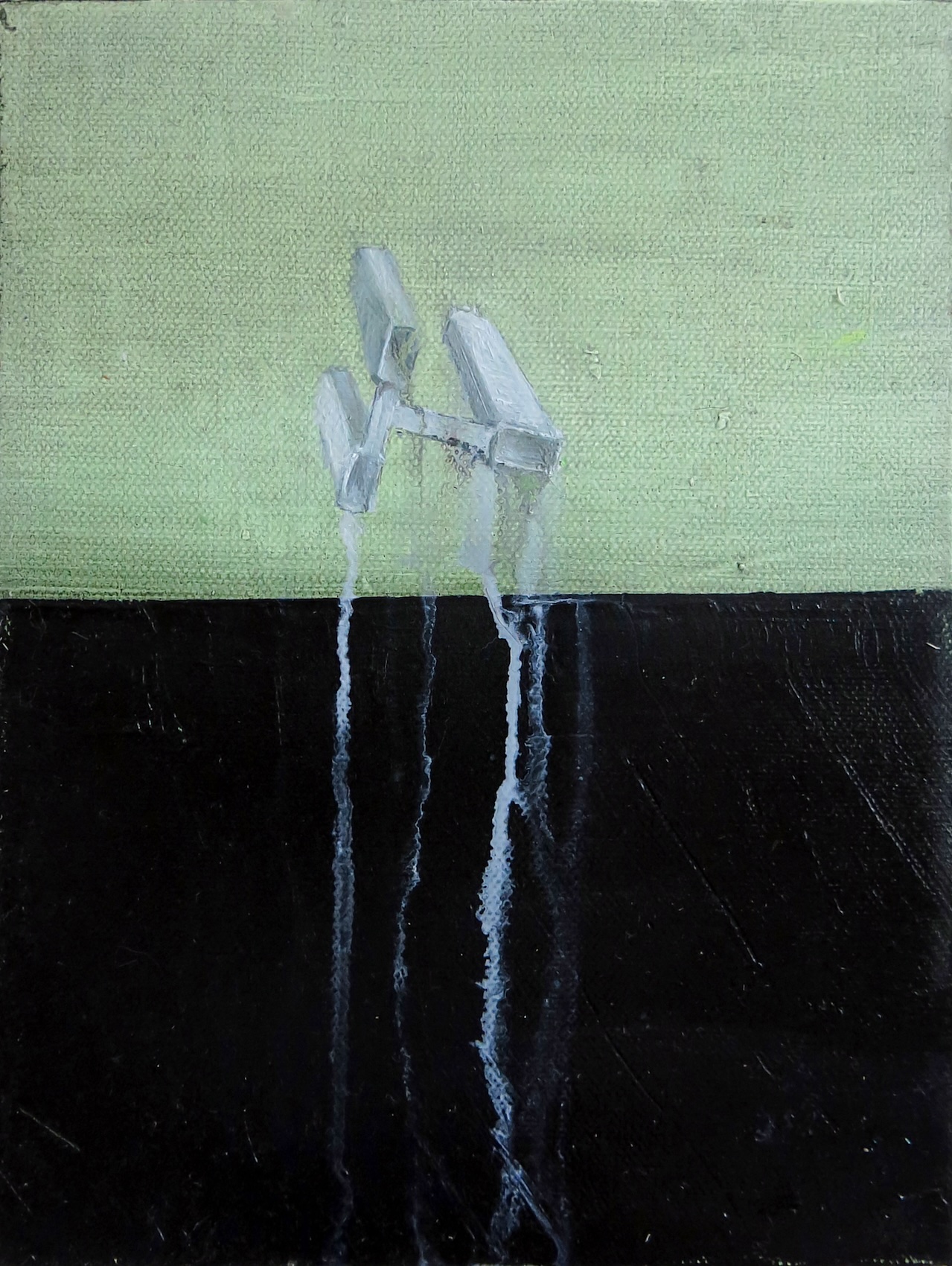
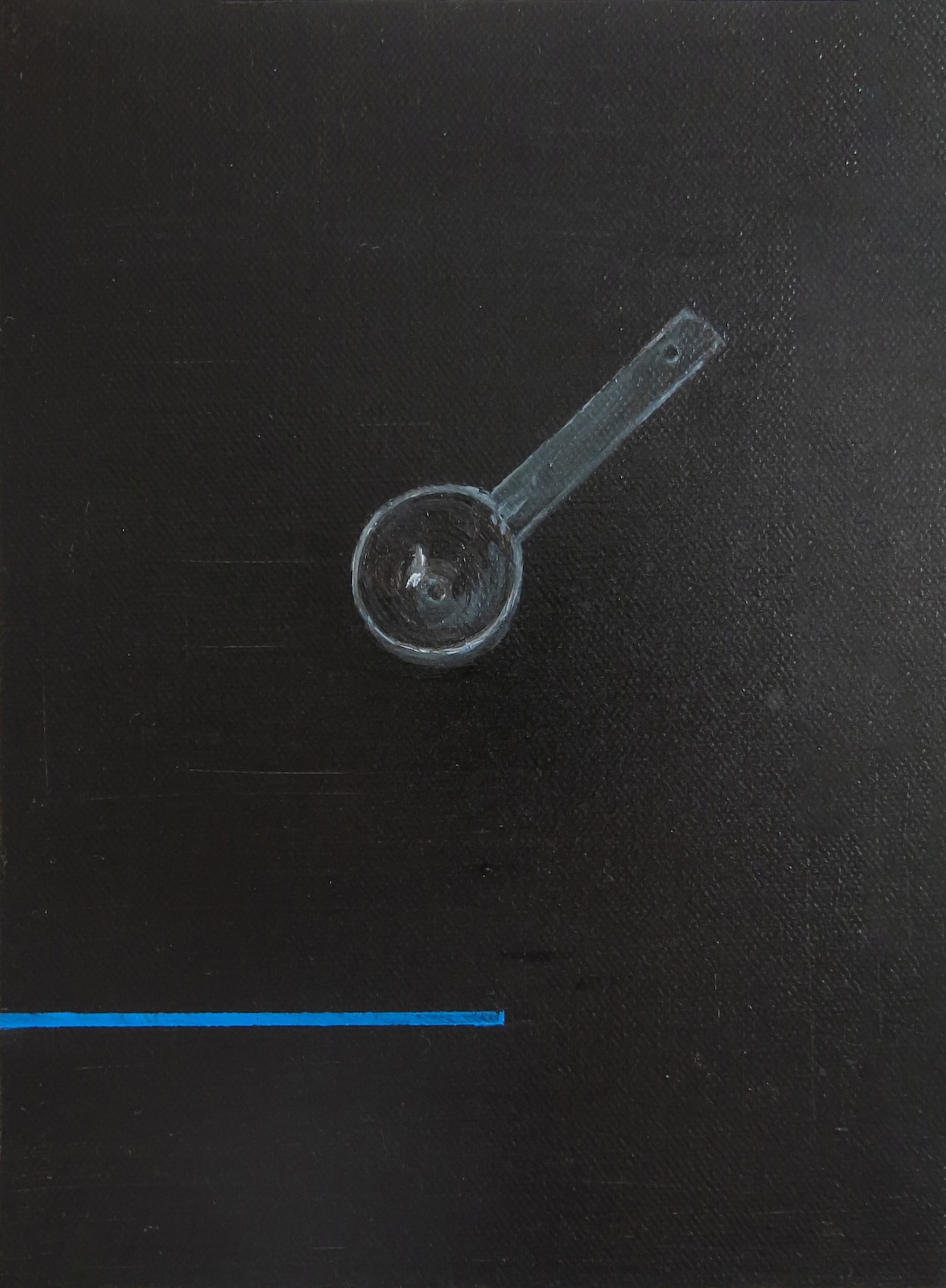
Discarded objects. A group of objects designed to be thrown away, some of them are single use – their deracination is inbuilt. Olive oil pull cap, plant clips, socket protector & measuring spoon.
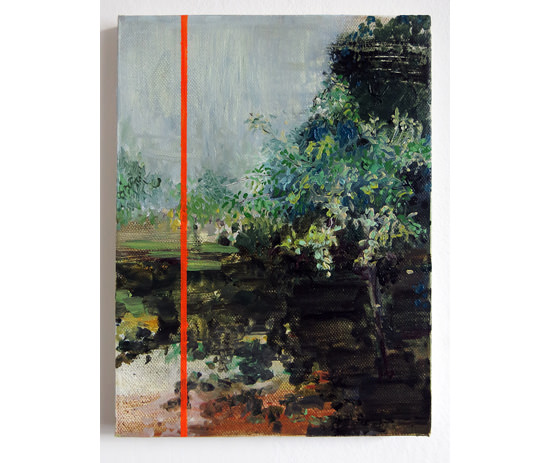
Painting can subvert the intention of its subject matter. I enjoy how things can be ordered in a painting, how it is constructed – spacial issues can be disregarded. Painting deals with flatness, how something sits in a space. By displaying the objects alongside the paintings I want to downplay any hierarchy, here, painting and object have the same importance.
Gone Away and Narrative Order
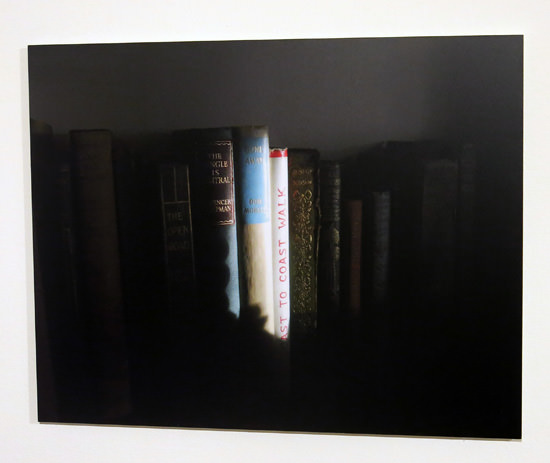
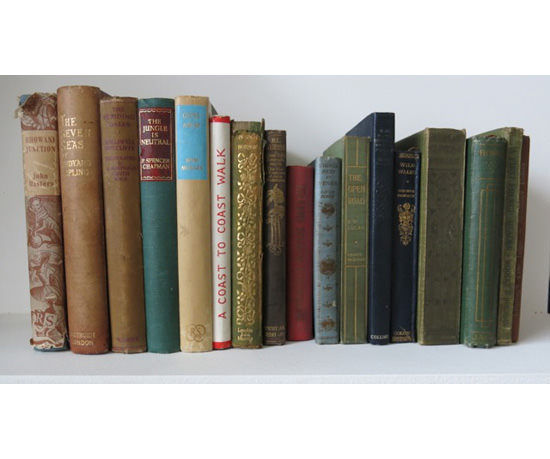
A photograph of early morning light falling on a row of books that belonged to my late father. It was only upon closer inspection of the titles that I realised all of them had something in common with travel and journeying. In the exhibition the actual books in their original order have been taken from their resting place and displayed alongside the photograph as an installation. A text panel documenting the list of books is displayed alongside. One of the books beautifully bound in light blue with etched gold decoration had the very incongruous title of ‘Things seen in Venice’. This book was the inspiration behind a video taken in Venice from a vaporetto. The film records ‘things’ seen on the journey.
Narrative Order
Bhowani Junctionby John Masters, The Reprint Society of London, 1956.
The Seven Seas by Rudyard Kipling, Methuen and Co. Ltd. 36 Essex Street W.C. London, Sixteenth Edition. June 1910.
The Striding Dales by Halliwell Sutcliffe, Frederick Warne & Co., Ltd. London and New York. Popular edition 1939.
The Jungle is Neutral by Field Marshal Earl Wavell, The Reprint Society London, 1950.
Gone Away – An Indian Journal by Dom Moraes, The Reprint Society of London, 1960.
A Coast to Coast Walk, A Pictorial guide by A Wainwright, Published by Westmoreland Gazette, Kendall, England. Twenty-ninth impression. 1973.
The Bible in Spain or, The journeys, Adventures, and Imprisonment of anEnglishman in an attempt to circulate the Scriptures in the Peninsula by George Borrow, Published by John Muray, Albemarle Street London. 1908.
Island Nights’ Entertainments The Misadventures of John Nicholson by Robert Louis Stevenson. Published by William Heinemann Ltd in association with Chatto & Windus. Third impression,1926.
Holland Belgium Luxembourg, Everyday pocket travel guide edited by E. Hope Samson. Published by W. Foulsham & Co., Ltd London, New York, Toronto, Cape Town, Sydney.
Things seen in Venice, by Lonsdale Ragg and Laura M, Ragg. Published by Seeley, Service and Co. Ltd, 38 Great Russell Street. London. 1920.
The Open Road A little book for wayfarers compiled by E. V. Lucas. Published by Grant Richards, London. First published 1899, this edition 1902.
The Journal of a tour to the Hebrides with Samuel Johnson by James Boswell. Published by Collins London and Glasgow. First published 1785, this edition 1955.
Wild Wales by George Borrow, Published by Collins London & Glasgow. Inscription inside – Margaret Jones, 5 Bank Buildings, Penmaenmawr, June 1934.
The Expedition of Humphrey Clinker by Tobias Smollett. Published by Hutchinson & Co, paternoster Row, London. Inscription inside – Brandon Burlow, Bham, 03.02.19.
L’Histoire d’une Tulipe by A. Dumas. Adapted by T.R.N. Crofts. Methuen’s Simplified French Texts, Eight edition. September 1924.
A First French Reader by E.O. Wooley and H. L Bourdin. Published by D.C Heath & Company, London. April 1929.
Flowers by Janet Harvey Kelman. Described by C.E. Smith. Published by Thomas Nelson and Sons, London, Edinburgh, New York, Toronto and Paris. Handwritten inscription inside – Christmas 1938.